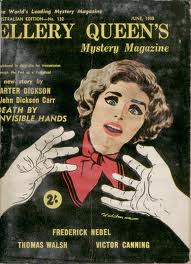
Charlotte
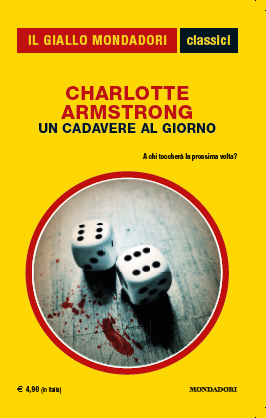
Armstrong : Un cadavere al giorno(Lay On, Mac Duff!, 1942) – translation:
Simonetta Cattozzo - I Classici del Giallo N. 1308, Mondadori, 2012, October
Charlotte Armstrong, born in
Vulcan, Michigan, he was thirty-seven
years old when she published her first crime novel, Lay on, Mac Duff!, 1942, who began
the cycle of the same name.
However, it ended in 1945, after
only three novels. Was enough, however, to open the
doors of success, and to make her
appreciate how one of the writers
finer and even
more ingenious of
the panorama detective U.S..
In fact, Lay on, Mac Duff!, followed by The Case of the Weird Sisters, 1943 and The Innocent Flower,1945, consecrated her definitely as a writer of the first magnitude.
Lay on, Mac Duff!, 1942, is an excellent novel, which I would define as experimentation was well received by the public, without being exceptional. In fact, there are already several ideas that Charlotte Armstrong inserted in later novels.
A poor orphan, Bessie Gibbon, is welcomed in the home of a rich uncle, Charles Cathcart, who is also known as a bird of prey of high finance, and which has three partners, with which he often plays. When Bessie is introduced in his house, she find his uncle who plays "Royal Table" along with Guy Maxon, Bertram Gaskell and Hudson Winberry. There is also secretary of Winberry, Hugh Miller. In the room, the air is not kind: Bessie clearly perceives an aura of evil, hatred repressed.
That deepens, when his uncle lost (an anomaly, since always wins) and won the shareholders: for anger, Uncle Charles throws, unseen, three red men, some of the pieces with which he plays this game, the window . Bessie observes it. That very night, when the guests are all gone, Winberry is killed in his house with a gun, and the corpse is found at one of the three red checkers, similar to those that Charles had thrown out the window.
In fact, Lay on, Mac Duff!, followed by The Case of the Weird Sisters, 1943 and The Innocent Flower,1945, consecrated her definitely as a writer of the first magnitude.
Lay on, Mac Duff!, 1942, is an excellent novel, which I would define as experimentation was well received by the public, without being exceptional. In fact, there are already several ideas that Charlotte Armstrong inserted in later novels.
A poor orphan, Bessie Gibbon, is welcomed in the home of a rich uncle, Charles Cathcart, who is also known as a bird of prey of high finance, and which has three partners, with which he often plays. When Bessie is introduced in his house, she find his uncle who plays "Royal Table" along with Guy Maxon, Bertram Gaskell and Hudson Winberry. There is also secretary of Winberry, Hugh Miller. In the room, the air is not kind: Bessie clearly perceives an aura of evil, hatred repressed.
That deepens, when his uncle lost (an anomaly, since always wins) and won the shareholders: for anger, Uncle Charles throws, unseen, three red men, some of the pieces with which he plays this game, the window . Bessie observes it. That very night, when the guests are all gone, Winberry is killed in his house with a gun, and the corpse is found at one of the three red checkers, similar to those that Charles had thrown out the window.
The police
immediately directs the crime matured in its environment. Only
three people, so they could commit and take advantage of: the three partners. The
clues would become four if you add the three the only other man present that
evening at home Cathcart: Hugh Miller, assistant Winberry. Hugh
Miller just before the crime is consumed said he lost his apartment key to
Winberry: will be found somewhere else later.
But soon the investigation looming difficult. All have their say, and it is not possible at the moment scratching the alibi: All three, in fact all four, could have committed the murder. But why Miller would kill his own employer? There would have received nothing. The others may get something.
The problem is that the victim is said to have exclaimed that he had never seen before his murderer: it was rescued when he was still alive. What does this mean? If true at all, he could not be one of the other three, even four, the murderer, because the victim would not have whispered, more to the point of death, not to recognize it.
The more we go forward with the investigation, the more you know other details: the home, which has helped the owner, said that there were two entrances into the house, one after the other, and after a while he heard, for the second time, the door open, he heard the shot. Old as the servant, when he rescued the master, the murderer was already far away.
However, what really you can not understand is because the victim has not removed his coat, if it was there first. This coat is one of the peculiar characteristics of this novel: it can be said that Armstrong plays with sensations. I will say further, the appearance of the amateur Mac Duff, a former professor of History, the sensations, perceptions, moods are often the most interesting clues. Here the feelings are those inherent in the heat and cold. Return several times in the course of the novel. On that occasion, this insistence on the opposition between hot and cold is evident twice, not only in reasoning on the coat (and there will be another even more important at the end of the novel, on the other the head of another person, from which emerge undoubtedly the guilt of the murderer), but also on what you appointment on the glasses. Yeah, because someone (Mac Duff, after being hired by Bessie and her boyfriend, journalist Jones) reflecting on the famous coat, suggests that the host may not have been the first to arrive, but the second fact, the what could be related to the fact that he had his glasses, and that, as everyone knows, when you switch from a colder to a warmer, glasses fog up. But why he had never seen? Bessie at this point reveals something that MacDuff did not know: during the famous game, Winberry, a bad person as sin, he exclaimed several times the word "never", but not giving it his absolute meaning. It means that in our case, could mean, that he "could not see him." What is in accord with the hypothesis of glasses fogged.
But soon the investigation looming difficult. All have their say, and it is not possible at the moment scratching the alibi: All three, in fact all four, could have committed the murder. But why Miller would kill his own employer? There would have received nothing. The others may get something.
The problem is that the victim is said to have exclaimed that he had never seen before his murderer: it was rescued when he was still alive. What does this mean? If true at all, he could not be one of the other three, even four, the murderer, because the victim would not have whispered, more to the point of death, not to recognize it.
The more we go forward with the investigation, the more you know other details: the home, which has helped the owner, said that there were two entrances into the house, one after the other, and after a while he heard, for the second time, the door open, he heard the shot. Old as the servant, when he rescued the master, the murderer was already far away.
However, what really you can not understand is because the victim has not removed his coat, if it was there first. This coat is one of the peculiar characteristics of this novel: it can be said that Armstrong plays with sensations. I will say further, the appearance of the amateur Mac Duff, a former professor of History, the sensations, perceptions, moods are often the most interesting clues. Here the feelings are those inherent in the heat and cold. Return several times in the course of the novel. On that occasion, this insistence on the opposition between hot and cold is evident twice, not only in reasoning on the coat (and there will be another even more important at the end of the novel, on the other the head of another person, from which emerge undoubtedly the guilt of the murderer), but also on what you appointment on the glasses. Yeah, because someone (Mac Duff, after being hired by Bessie and her boyfriend, journalist Jones) reflecting on the famous coat, suggests that the host may not have been the first to arrive, but the second fact, the what could be related to the fact that he had his glasses, and that, as everyone knows, when you switch from a colder to a warmer, glasses fog up. But why he had never seen? Bessie at this point reveals something that MacDuff did not know: during the famous game, Winberry, a bad person as sin, he exclaimed several times the word "never", but not giving it his absolute meaning. It means that in our case, could mean, that he "could not see him." What is in accord with the hypothesis of glasses fogged.
So the murderer
was the first to come in, waited for the landlord and when they appeared on the
threshold of the room, he immediately fired: the other because of the glasses
fogged did not see it. It
puts everything into question: would anyone, guest house Cathcart, killing him.
Because,
despite this, and the subsequent murder of Gaskell, occur in the homes of the
victims, everything is built into the atmosphere of home Cathcart. Ultimately,
everything that happens in this house has repercussions elsewhere.
Then there is the second murder: Gaskell was stabbed. Here, too, all of them are responsible, only that the number decreases. We shall see what significance it may have, stylistically speaking, this event.
Main suspect is just Cathcart, on the basis of the testimony of Hugh Miller, who says he tried to warn him by phone late at night, in the assassination of Winberry, and have not found it in the room (twice, at a distance of ten minutes apart). Based on this, and the fact that Bessie then see him that night, on the stairs, with shoes, not slippers, to show that it was resting, and Bessie Miller, on the night of the assassination of Gaskell, put the cords at the gates of the palace, so we know if indeed the master of the house comes out of stealth or not. Furthermore, when they do, Bessie realizes that one of the three coats disappeared from coat hook. Reappear, and a cord will fall. The reappearance of this coat, and the new hot-cold contrast, it will bind the final deduction that will nail the murderer to his/her responsibilities.
However, this second crime, not only in this case we have a new thermal contrast: in fact, it is mainly the problem of the clock thermostat of the heating system of the house to keep the counter. It 'was found broken, the glass and the hands broken, crooked, so you can not know with certainty whether the displayed time actually is that of death, related to the breaking of the watch, or if the murderess has deliberately moved manually hands to believe that the crime was committed at two a.m. in the morning and instead took place at midnight, at which time the motives of the suspects are no longer unassailable. As you can see, however, a new duel cold-hot.
Then there is the second murder: Gaskell was stabbed. Here, too, all of them are responsible, only that the number decreases. We shall see what significance it may have, stylistically speaking, this event.
Main suspect is just Cathcart, on the basis of the testimony of Hugh Miller, who says he tried to warn him by phone late at night, in the assassination of Winberry, and have not found it in the room (twice, at a distance of ten minutes apart). Based on this, and the fact that Bessie then see him that night, on the stairs, with shoes, not slippers, to show that it was resting, and Bessie Miller, on the night of the assassination of Gaskell, put the cords at the gates of the palace, so we know if indeed the master of the house comes out of stealth or not. Furthermore, when they do, Bessie realizes that one of the three coats disappeared from coat hook. Reappear, and a cord will fall. The reappearance of this coat, and the new hot-cold contrast, it will bind the final deduction that will nail the murderer to his/her responsibilities.
However, this second crime, not only in this case we have a new thermal contrast: in fact, it is mainly the problem of the clock thermostat of the heating system of the house to keep the counter. It 'was found broken, the glass and the hands broken, crooked, so you can not know with certainty whether the displayed time actually is that of death, related to the breaking of the watch, or if the murderess has deliberately moved manually hands to believe that the crime was committed at two a.m. in the morning and instead took place at midnight, at which time the motives of the suspects are no longer unassailable. As you can see, however, a new duel cold-hot.
This continual
opposition between two opposing thermal stages however, is not just a story of
feelings and perceptions, it is mainly the key that will lead to the final
solution.
However, before this happens, there will be a third murder. And then there will be a duel-comparison between the only two possible be suspected. But at that moment will be a third wheel road: Herbert Graves.
In this mysterious third character is tied to a particular of which we have spoken at the time of the murder of each of the three members of Cathcart, close to the victim, was found a red man. And three red men were thrown out the window, to anger, to Charles after the loss of the game. These red men, we learn later, are strangely very similar to the candy Peppinger, now withdrawn from the market because they contained traces of drugs: their formula was invented by the Herbert Graves, who had sold it to Guy Maxon, Bertram Gaskell, Hudson Winberry and Charles Cathcart, who had to turn on the market with the characteristic shape of a little man.
After being paid, however Herbert Graves, in retrospect, having a sick wife and he felt that he was being paid too little in comparison with the fortune that the four had accumulated, had tried to get something else that he would need to pay the care of his wife, but she got nothing. And all the while his wife was dead. Of the four that had better luck later was Cathcart, the only one who had promised to give him some help, only had he provided too late, so the anger of Graves had been seeking above all to her. As you can see, an excellent motive to kill: the revenge.
And Lina what part had? Tried in turn to take Mac Duff to save her husband from a desperate situation: she is really foreign to crimes or she helped him? Or took the investigator to remove from himself the suspicion that he wanted to conspire against her husband, who has won only with the promise that he would not send to jail the father of Lina?
The conclusion will be surprising, because the final test, the challenged will supply Bessie. It will once again be based on the contrast between warm and cold.
However, before this happens, there will be a third murder. And then there will be a duel-comparison between the only two possible be suspected. But at that moment will be a third wheel road: Herbert Graves.
In this mysterious third character is tied to a particular of which we have spoken at the time of the murder of each of the three members of Cathcart, close to the victim, was found a red man. And three red men were thrown out the window, to anger, to Charles after the loss of the game. These red men, we learn later, are strangely very similar to the candy Peppinger, now withdrawn from the market because they contained traces of drugs: their formula was invented by the Herbert Graves, who had sold it to Guy Maxon, Bertram Gaskell, Hudson Winberry and Charles Cathcart, who had to turn on the market with the characteristic shape of a little man.
After being paid, however Herbert Graves, in retrospect, having a sick wife and he felt that he was being paid too little in comparison with the fortune that the four had accumulated, had tried to get something else that he would need to pay the care of his wife, but she got nothing. And all the while his wife was dead. Of the four that had better luck later was Cathcart, the only one who had promised to give him some help, only had he provided too late, so the anger of Graves had been seeking above all to her. As you can see, an excellent motive to kill: the revenge.
And Lina what part had? Tried in turn to take Mac Duff to save her husband from a desperate situation: she is really foreign to crimes or she helped him? Or took the investigator to remove from himself the suspicion that he wanted to conspire against her husband, who has won only with the promise that he would not send to jail the father of Lina?
The conclusion will be surprising, because the final test, the challenged will supply Bessie. It will once again be based on the contrast between warm and cold.
What do we see in
this first work by Charlotte Armstrong?
The first, we have two figures of investigation: Bessie, who, despite being initially despised or at least little regarded by the inhabitants and visitors of Casa Cathcart, has an important place in the affair; MacDuff that the allegations in the final frantic processes and leads to the definition of logical reasoning allows you to trap the murderer. However, who provides him with the keys to understand the situation is Bessie. Therefore, together with MacDuff, she forms the ideal couple Holmes-Watson of the story.
The two figures are reference points in a novel that is not of pure suspense (characteristic of Armstrong), but in which there are moments of great tension, which takes advantage of the reading, which goes smoothly and without a hitch, like a train fast. However, this first novel is basically a novel of character, a classic mystery.
We have said that in this novel, the emotions have their own importance. Mac Duff says: ".. Man's actions depend on his emotions .. The murder of Winberry rooted in the emotions of someone .."
What does it mean in the novels of Armstrong, perceptions and feelings are more important clues? Charlotte Armstrong, starting from 1942, there is much akin to the English classical detection by the evidence as a means of absolute survey (Doyle and Freeman especially), but rather to the American of the past decade: in other words, it inherits the vandinian detection. As repeatedly stated Philo Vance in his works, the evidence would be nothing if not follow the psychology of the characters: if this does not appear, you might not understand the intellectual game, the puzzle as a means to affirm the mind, deductive reasoning, who had triumphed in the period immediately preceding the entrance of Charlotte Armstrong. Moreover, the investigation of Sherlock Holmes is opposite to that of Philo Vance, as a concept, because while the first is expressly based on purely scientific methodology, the second re-evaluates the expression of humanistic inquiry, which is based on examination of the human soul, feelings. So, Charlotte Armstrong inherits Van Dine. Yes But Rufus King, wise use to build the tension in the story. And even Agatha Christie, when you have the revelation that a character in the story, it really is not what it appears, but it is another person under a false name, who you thought it was, and that he had all the motive for kill
The first, we have two figures of investigation: Bessie, who, despite being initially despised or at least little regarded by the inhabitants and visitors of Casa Cathcart, has an important place in the affair; MacDuff that the allegations in the final frantic processes and leads to the definition of logical reasoning allows you to trap the murderer. However, who provides him with the keys to understand the situation is Bessie. Therefore, together with MacDuff, she forms the ideal couple Holmes-Watson of the story.
The two figures are reference points in a novel that is not of pure suspense (characteristic of Armstrong), but in which there are moments of great tension, which takes advantage of the reading, which goes smoothly and without a hitch, like a train fast. However, this first novel is basically a novel of character, a classic mystery.
We have said that in this novel, the emotions have their own importance. Mac Duff says: ".. Man's actions depend on his emotions .. The murder of Winberry rooted in the emotions of someone .."
What does it mean in the novels of Armstrong, perceptions and feelings are more important clues? Charlotte Armstrong, starting from 1942, there is much akin to the English classical detection by the evidence as a means of absolute survey (Doyle and Freeman especially), but rather to the American of the past decade: in other words, it inherits the vandinian detection. As repeatedly stated Philo Vance in his works, the evidence would be nothing if not follow the psychology of the characters: if this does not appear, you might not understand the intellectual game, the puzzle as a means to affirm the mind, deductive reasoning, who had triumphed in the period immediately preceding the entrance of Charlotte Armstrong. Moreover, the investigation of Sherlock Holmes is opposite to that of Philo Vance, as a concept, because while the first is expressly based on purely scientific methodology, the second re-evaluates the expression of humanistic inquiry, which is based on examination of the human soul, feelings. So, Charlotte Armstrong inherits Van Dine. Yes But Rufus King, wise use to build the tension in the story. And even Agatha Christie, when you have the revelation that a character in the story, it really is not what it appears, but it is another person under a false name, who you thought it was, and that he had all the motive for kill
Now, what is the
salient feature of the novel? It
's a mystery with a strong tension, a tension that in certain moments become
spasmodic. At
this point, add frame which is the voltage which serves Charlotte Armstrong,
because it serves to frame the importance of his work, not only in the case of
this novel, but also of others.
The suspense writers in her past is directly related to the atmosphere. The atmosphere, the set of those elements that impact on the minds of individuals (terror, fear, joy, emotion, etc. ..) is most often linked to descriptions of the environment: a dark night, the presence of the moon , noise, etc. .. This atmosphere, leads to a voltage descriptive, which is typical of the authors of the '20s (Connington in the head).
Then there is a voltage of psychological-descriptive that I think the Armstrong may have borrowed from Rufus King.
King - taking a step of my essay published on the blog Mondadori two years ago - "was very important to the description of the characters and the atmosphere, and concentrate its efforts in enclosed spaces”.. Sometimes, Rufus King works with the technique of hint: adding or removing a few details to the picture, in an absolutely brilliant manner , that picture is constantly changed and this creates an emotional tension.
Charlotte Armstrong to this kind of psychological-emotional approach to descriptive, adds something of his own, in terms of pure style, which leads to even more pronounced results: when the number of people involved in the plot, which can also be indicted (as in this case), is maximum, the emotional tension is minimal; as, instead, the number progressively thins, the voltage increases. This reaches the maximum when it comes to a climax, with the elimination of the innocent and identifying the guilty party. In other words, a max. number of stakeholders to a some event is inversely proportional to the voltage generated: max number of subjects = minimum voltage, minimum number of subjects = maximum voltage.
The suspense writers in her past is directly related to the atmosphere. The atmosphere, the set of those elements that impact on the minds of individuals (terror, fear, joy, emotion, etc. ..) is most often linked to descriptions of the environment: a dark night, the presence of the moon , noise, etc. .. This atmosphere, leads to a voltage descriptive, which is typical of the authors of the '20s (Connington in the head).
Then there is a voltage of psychological-descriptive that I think the Armstrong may have borrowed from Rufus King.
King - taking a step of my essay published on the blog Mondadori two years ago - "was very important to the description of the characters and the atmosphere, and concentrate its efforts in enclosed spaces”.. Sometimes, Rufus King works with the technique of hint: adding or removing a few details to the picture, in an absolutely brilliant manner , that picture is constantly changed and this creates an emotional tension.
Charlotte Armstrong to this kind of psychological-emotional approach to descriptive, adds something of his own, in terms of pure style, which leads to even more pronounced results: when the number of people involved in the plot, which can also be indicted (as in this case), is maximum, the emotional tension is minimal; as, instead, the number progressively thins, the voltage increases. This reaches the maximum when it comes to a climax, with the elimination of the innocent and identifying the guilty party. In other words, a max. number of stakeholders to a some event is inversely proportional to the voltage generated: max number of subjects = minimum voltage, minimum number of subjects = maximum voltage.
An atmosphere
like that, artificially constructed on the basis of a process purely literary
style, is enhanced here by a component of pure atmosphere: claustrophobia,
together with another: evil. In
practice, everything that happens, happens because something lingers in the
house, a feeling of repressed hatred that feeds on itself: as long as the
characters of the story, are locked up in various rooms of the house, the
perceptions of hate Bessie
(character alien to the house, which is on the outside, and is therefore more
receptive to those who already live in that environment), perceives, are always
very strong, when in fact the characters leave the room, that's the voltage
drops . This
decrease was most certainly down also highlighted by the comparison of the
situations in which governs the repressed feelings of hatred expressed by the
assassin, who attends that environment for some time, and the brightness and
light of Lina Cathcart, young wife of Charles Cathcart, which
dissipate the atmosphere of hatred.
The claustrophobia is a mode accentuates the voltage, which is not only found here. In fact, here it is in a sense proven, but its highest expression is in the staging of the three sisters (almost three Fates) a blind, a deaf, a truncated, which are locked in the old house in The Case of the Weird Sisters , the second novel cycle Mac Duff.
Normally, in the dark, at night, is connected a feeling of insecurity in the novels, and in reality, murder, robbery, rape are almost always in the evening, at night, in the dark, in places not frequented, not light, the light are connected instead of the states related to the safety and well. In the case of our novel, these two original states and visible, is also linked to the opposition of perceptions related to temperature, cold or warm. These meet the need of creating an additional, suggesting that some things happen when there is a temperature other when there is another. More precisely, since the first two murders happen at night, and the nights are cold, the bad syllogism is associated with the cold, because it takes place outside the house, where, instead, everything is under control, where there is the warmth of the hearth.
When heat reacts the bitter cold, here fogging and the first murder, when in the second case is changed the timer on the thermostat inside the house, it is because there was the second murder. The third will subtract this logical sequence, because the second will not premeditation but according to the occasion that needs to be taken on the fly, “carpe diem” that defies every law intended.
But Charlotte Armstrong finds in this novel, in contrast cold hot, the emotional root of the novel, because, I believe, is the source of perceptual sensation of cold-hot: cold not only because it is connected to the death of the night, but because as you get closer to death, becomes less hot, because death is cold. So where there is cold, regardless of whether it is day or night, you end up dying, if you are not properly repaired.
Bessie will be conclusive evidence of the identity of the murderer, and the exoneration of the innocent, right in the cold-warm contrast: the coat if it had been used at night, it would have been cold, but instead what she cherished was warm, ie had remained in the house, had not been brought out into the night. And even more consequently, it could not be that coat was used by the murderer.
Not surprisingly, will remember this particular prior to the murderess is recognized that, when associate the warmth of the coat and the warmth that she had tried clutching journalist Jones, feeling the warmth of his coat, when he repaired properly between the his arms.
In other words, it is as if Charlotte Armstrong had said that "only love can conquer hate."
The claustrophobia is a mode accentuates the voltage, which is not only found here. In fact, here it is in a sense proven, but its highest expression is in the staging of the three sisters (almost three Fates) a blind, a deaf, a truncated, which are locked in the old house in The Case of the Weird Sisters , the second novel cycle Mac Duff.
Normally, in the dark, at night, is connected a feeling of insecurity in the novels, and in reality, murder, robbery, rape are almost always in the evening, at night, in the dark, in places not frequented, not light, the light are connected instead of the states related to the safety and well. In the case of our novel, these two original states and visible, is also linked to the opposition of perceptions related to temperature, cold or warm. These meet the need of creating an additional, suggesting that some things happen when there is a temperature other when there is another. More precisely, since the first two murders happen at night, and the nights are cold, the bad syllogism is associated with the cold, because it takes place outside the house, where, instead, everything is under control, where there is the warmth of the hearth.
When heat reacts the bitter cold, here fogging and the first murder, when in the second case is changed the timer on the thermostat inside the house, it is because there was the second murder. The third will subtract this logical sequence, because the second will not premeditation but according to the occasion that needs to be taken on the fly, “carpe diem” that defies every law intended.
But Charlotte Armstrong finds in this novel, in contrast cold hot, the emotional root of the novel, because, I believe, is the source of perceptual sensation of cold-hot: cold not only because it is connected to the death of the night, but because as you get closer to death, becomes less hot, because death is cold. So where there is cold, regardless of whether it is day or night, you end up dying, if you are not properly repaired.
Bessie will be conclusive evidence of the identity of the murderer, and the exoneration of the innocent, right in the cold-warm contrast: the coat if it had been used at night, it would have been cold, but instead what she cherished was warm, ie had remained in the house, had not been brought out into the night. And even more consequently, it could not be that coat was used by the murderer.
Not surprisingly, will remember this particular prior to the murderess is recognized that, when associate the warmth of the coat and the warmth that she had tried clutching journalist Jones, feeling the warmth of his coat, when he repaired properly between the his arms.
In other words, it is as if Charlotte Armstrong had said that "only love can conquer hate."
Pietro De Palma