Saturday, December 28, 2013

In Whose Dim Shadow: A misunderstood Locked Room


Connington was an author who began writing detective novels , such as a recreation : there was a voice saying that in the 30s, several professors were reading mysteries for leisure  .. but it is also true that many illustrious minds wrote them: Dorothy Sayers , Nicholas Blake , Edmund Crispin , Thomas Kyd , and in fact J.J. Connington , whose name was in reality A.W.Stewart, who was a famous scientist and professor of chemistry .
In Whose Dim Shadow, is a novel of 1935 . That is the main feature by Connington , ie the atmosphere ( the full moon , dark, mysterious secret passages, for example . ) does not exist here . The novel in fact looks like a Whodunnit, characteristic of the mid-30s , a novel puzzle to as many of those years, though always fascinating and very well built (although, once again, the murderer is, for the expert reader, very easy to find : I found him at least 150 pages before the end ).
The fact is that Connington is always too respectful vs the reader, and often says too much about the suspects , flaunting the features , so ... at some point , who has an analytical memory of what he  read , and who knows that 2 +2 is always 4 , must understanding who is the murderer , also if  improbable ) .
In this case we have a police officer, William Danbury, who is eager to shine , but to do it, he would need something really interesting, that by sheer coincidence , it happens under his nose: while he is on patrol at night , Mr. Geddington who lives on the street Grove No. 5, begs him to intervene in a stable, because you heard a gunshot . Danbury who is not looking for it , finds a nice hot hot body in a vacant apartment , where is in progress a work to painting the walls : in the middle of a room is the body of a man , his face disfigured from a gunshot fired in face, in the midst of a can of paint spilled, blood stains on the floor and a handkerchief that was soaked by it , and into a can of paint , a gold cross in the shape of Tau. In addition, the corpse wearing gloves, rubber shoes and has a truncheon in his pocket, by very effective craft. The investigations have suffered very difficult .
There is apparently no real clue , so that even the clothes are free of riconoscitive plates , and none of the tenants of the building , at first sight recognize him. There is a free-lance journalist , intrusive and perpetual hunt for the scoop, Barbican , which was the first to rush and the first to help the agent Danbury and his colleague to isolate the crime scene ; there is the architect Barnard ; George Mitford 's former office clerk who lives very modestly with a small income , and who dreams of fairy-tale places of Japan; there is a couple who always invites people into their apartment , extraction of high social or at least wants to believe it; there is the lady Sternhall , of French origin that gives lessons of his original language in his house, and his brother , a kind but decided from the dodgy : the woman is alone, because her husband , is always away on business , and at the time of the discovery of the corpse, is far away. In short, a varied fauna . To these are added two other types , which together with some tenants, usually go home Sternhall to learn or improve French : Bracknell 's Ambrose , a young and handsome preacher of a Christian sect , and Miss Huntingdon , a girl who fells in love with him . The fact is that the body , reassembled , and especially his face, clean from the blood and made presentable , make sure that the body is recognized and associated with Mr. Sternhall that at the time of death should have be far away, and that instead he was very close to his home. You will find that he led a double life , because he had two wives, so he was a bigamist : he had fired a poor clerk and had haunted him , and he himself was persecuted in turn by a blackmailer who knew his secrets. You will find that  Bracknell was what had lost in the scuffle with the Sternhall the pendant in the shape of Tau , but he was not the murderer: to remove himself from the suspicions of the police he did not hesitate to put in the middle Miss Huntingdon who was infatuated : in short, a great villain ! The same  lady Sternhall didn’t tell many things to Sir Clinton Driffield, Chief of Police and the protagonist of the many novels of Connington .
The corpse will not be alone in the rest of the novel , but will be accompanied by a second , that of the employee ( he was the one who happened to be fired from Sternhall ) than eager to earn thousand dollars placed as pets for people for who would reveal to the police the details useful to catch the murderess , recklessly flaunting them by referring to a letter that he intends to send to attention of the Chief of Police : precisely this recklessness will cost him his death. The killer , that if someone had not already identified , we understand  now who he might be, kills him simulating a suicide in a Locked Room . The death will be recognized instead as murder when around the corpse will recognize two different types of blood. Sir Clinton in the last pages , with the help of his friend Wendover (a kind of Dr. Watson , but much more acute than the companion of Sherlock Holmes) , will nail the murderer ( in case you had not yet figured out who he could be ) and explain the obscure points of the drama: the last pages before the final revelation have only a summary of the summary , since the murderer comes already turned before that is twenty pages before he is stopped.
If the novel , in the succession of titles by Connington , it loses a lot in the atmosphere and buys in the creation of the riddle and its solution, a character is very recognizable , as it is a real brand of production by Connington : as we said J.J.Connington really was a great scientist , and in all his novels , Stewart introduced a few electronic devilry , or some invention or some gimmick that had contacts with physics or chemistry . In this novel , particularly interesting is the analysis of the blood vessels and organs of the body , and the comparison with the blood found on the floor , on the significant assumption that if it was the blood gushed from the wound , it would have coagulated all at the same time . And instead the fact that there is clotted blood and fresh blood reinforces the hypothesis of a tampering of the crime scene. Also there is the characteristic data of the absence of fingerprints , obtained using lycopodium powder .
The club moss ( Lycopodium ) is a genus of vascular plants belonging to the family Lycopodiaceae, fairly widespread throughout the world. Its spores , being highly flammable , are used for fireworks and even at the circus . However, in this novel, A.W.Stewart took advantage of the intrinsic property of lycopodium powder , to be refractory to the water , as it has large absorption properties , and because of this property , specifically used in the pharmaceutical industry : because the sweat is a percentage composed of a certain amount of water , covered the fingertips with lycopodium , they would not leave fingerprints. Another salient feature of the novel, is that it begins without an introduction (in use of other British novelists of the time: Christie , Marsh, Heyer ) at which it is  the early genesis of the crime: in this , the novel is very similar to the American novel .
Essentially , in fact, one of the differences in structure between American crime fiction and the Anglo-Saxon par excellence, is the absence of an introduction : the novel begins with the murder , and only then begin the investigation of which the reader participate: in other words the reader is treated to the detective. From this, the tendency will be originated , for example in Queen , to organize a duel between writer and reader, with the challenge to the reader. But in the British detective novel , before the murder , there is an introduction that introduces the reader to the environment in which the crime takes place , ie in other words, the reader is treated to the narrator . It seems to me a substantial difference,  because if at the British novel, the player has an advantage over the detective because he has witnessed the events whose the detective knows nothing , and so the final solution will be even more a defeat of the reader, because the detective knew nothing and instead managed to finish first,  in the U.S. , the reader is really on the same level of the detective , and then the duel took place with equal intensity by both parties and there is a real chance that the reader draws the detective's ability to solve the problem. In its essence, the novel would seem  an archetype of a procedural , in which, as in all Connington’s novels , investigations are carried out by the police:  to act is the Chief of Police, which behaves like a real investigator , however, supported from other law enforcement agencies . It is not a unique case : in fact, more or less in the same year, was born on the other side of the globe , from the pen of Anthony Abbot, another similar investigator: The Chief of Police, Commissioner Thatcher Colt.
The curiosity is that in this novel there is a Locked Room , not known to most. Written in the same year of The Hollow Man by Carr, in 1935 , it presents several individual characters that connect itself to this novel by Carr , and to another novel by Carr, The Gilded Man (published as Carter Dickson) with Sir Henry Merrivale , in 1942: for example, the owner of the house, found that comes in disguise, with rubber gloves and with rubber shoes , and a truncheon in his pocket; in The Gilded Man there is the master of the house who plays the role of a thief in his house , complete with gloves and shoes rubber and he is attacked : the only difference is that in that case he was seriously injured , but here he is killed. Even there (The Hollow Man) , as here , there is a Locked Room , but what interests me is to point out that once again , it would seem to me that was Carr to model Connington , and not the opposite. The dates of publication are in fact symbolic, but in its essence, the novel is very different from other most classic novels. Here the staging of the crime novel approaches to the very most celebrated Carr ( had already appeared several novels Carr, with their characteristics, before 1935 ) : there’s the typical tendency to act out a situation in which several elements appear bizarre and each of they in turn suggests that a sub-mystery must be explained. Interesting also appears to be the dual assertion of Sir Clinton about Locked Rooms : before he says to have thought at least six ways to use a trick to close a door from the inside,  as an intellectual exercise; after he recomes on the six ways to close a door from outside. Not only. He also explains that connecting the barrel of the gun to the barrel of the key and then the trigger on a string, you would be able to shoot the gun inside, pressing the string from the outside; or gripping and turning the stern of key and then using pliers from outside.
This is another example of “Conference of Fell” as that  in The Hollow Man by J.D.Carr. . For more, the trick used by Connington can be ascribed to the first group of examples cited by Carr for closing a door from the outside: a rod is inserted into the ring of the key so as to constitute a guide for two wires made ​​to pass under the door. In fact in The Hollow Man, we read : “…Chimneys, I regret to say," Dr. Fell pursued, his gusto returning as his abstraction left him, "chimneys, I regret to say, are not favoured as a means of escape in detective fiction--except, of course, for secret passages. There they are supreme. There is the hollow chimney with the secret room behind; the back of the fireplace opening like a curtain; the fireplace that swings out; even the room under the hearthstone. Moreover, all kinds of things can be dropped down chimneys, chiefly poisonous things. But the murderer who makes his escape by climbing up is very rare.
Besides being next to impossible, it is a much grimier business than monkeying with doors or windows. Of the two chief classifications, doors and windows, the door is by far the more popular, and we may list thus a few means of tampering with it so that it seems to be locked on the inside:
"1. Tampering with the key which is still in the lock. This was the favourite old-fashioned method, but its variations are too well known nowadays for anybody to use it seriously. The stem of the key can be gripped and turned with pliers from outside; we did this ourselves to open the door of Grimaud's study. One practical little mechanism consists of a thin metal bar about two inches long, towhich is attached a length of stout string. Before leaving the room, this bar is thrust into the hole at the head of the key, one end under and one end over, so that it acts as a lever; the string is dropped down and run under the door to the outside. The door is closed from outside. You have only to pull on the string, and the lever turns the lock; you then shake or pull out the loose bar by means of the string, and, when it drops, draw it under the door to you. There are various applications of this sameprinciple, all entailing the use of string (John Dickson Carr: The Hollow Man, London, Hamilton, 1935, Chapter XVII: The Locked-Room Lecture ) .
It would be interesting to see the dates of publication of Carr's novel, and the novel of Connington, both of 1935, to determine which of the two had been published before the other.
To the trick used by Connington to open a door from the inside, using a slash inserted into the ring of the key, will refer, however, Anthony Boucher, in his novel The Case of The Solid Key, 1941, without making the name of Connington: in this Boucher’s novel is introduced  a locked room, closed from inside by a Yale lock .

Pietro De Palma

P.S.

To compare other methods used in contemporary Locked Rooms or before of "The Hollow Man" by Carr, I point out the wonderful article by John Pugmire dedicated to "Locked Room Lecture" of Dr. Fell, to be read on his website LRI:


However, the trick of Connington, then reported by Boucher, to me does not seem appear.

Saturday, November 16, 2013

Margery Allingham – More Work for the Undertaker ,1948

Margery Alligham is one of the most famous exponents of the Golden Age of the detective novel, forming together with Agatha Christie, Ngaio Marsh and Dorothy Sayers, the so-called "Crime Queen"
She was born in London in 1904, in a family where the daily bread was the literature: the parents were writers, an aunt possessed a literary magazine. During childhood, the family moved to Essex where she waited in the studies. Returning to London in 1920, she attended acting studies and met her future husband, who always helped her in her editorial work, designing many of the covers of his books.
Margery began her writing career in 1923 with  Blackkerchief
Dick(a novel in which there were elements of occultism), without having a smashing success, and the same thing happened later, in 1928, when her first thriller was published in print serials, The White Cottage Mystery. However, the real success came when it said published her first novel, The Crime at Black Dudley, 1929 in which she introduced her recurring character, Albert Campion, a middle ground between the various characters of other authors: Lord Peter Wimsey by Sayers and Roderick Alleyn by Ngaio Marsh, and Philo Vance by Van Dine. Unravels the mysteries, but also lives adventures. Also, crafting the characters of Campion and Lugg, Allingham proves to have assimilated the basic idea, followed many times by the writers of the twenties and thirties: an investigator assisted by an aide. After Sherlock Holmes with his faithful Watson, the first writer to break the patterns was Chesterton who invented the priest-detective Father Brown as an assistant co-worker giving a former thief, Flambeau, who later became a detective. The Allingham seems to me that just draws from Chesterton and from this basic idea, to create the pair Campion-Lugg, not forgetting that Flambeau is  a derivation of Arsene Lupin, a thief and a detective (for his own purposes) at the same time.
Often, unlike other leaders, who make their characters act only within contexts fully seated high bourgeoisie (in which victims and killers are part of this organization), the Allingham did not disdain to combine elements of common crime in his stories, inheriting a cliché that it was the very first detective those '10s but also the beginning of the '20s (Meirs, Wallace, Holt, Rohmer, Farjeon, etc. ..). Just in response to this trend that it is seen most often expressed in her novels, that is to bring together a detection pure and kind of English hard-boiled, her stories are often unconventional and have remarkable points of surprise.
Exactly as in the novel More Work for the Undertaker, 1948), a work that is situated in the second half of her production (the first one that goes roughly until 1938, includes ten novels in nine years , in which the character of Campion is predominant in the story and has characters significantly of whodunnit, and the second running from 1941 to 1968 that includes 8 novels in 27 years, in which the main character tends to be dwarfed by other gradually present, and novels themselves are often much more structured than those of the early years), with its more than 200 pages, many characters, many subplots, and even elements of common crime that make the horizon of the novel even more varied and more rich than
appear in the first pages of the novel.
In the background there is a family, the Palinode, once the centerpiece of an entire neighborhood, reduced to poverty, whose members, all brothers and sisters, behave, some as if time didn’t  passed, with exaggerated dignity of class, treating the environment as the nullity (Evadne and also Lawrence), others with dignity or almost entirely absent, behaving like a pauper of the highest species, living by their wits, eating and drinking things taken from the woods or using herbs, only in order to save money (Jessica), still others living strangely their situation.This family dwelling in his house, sold over time and which are now no longer the owners but only boarders, sharing their lives, along with other tenants, all a bit strange: the ex-actor Carrie and ex-soldier , Cap. Seaton. To direct the retiree is Renee, a friend of Campion.
Campion is reluctantly embroiled in the history of Palinode, also called on to deal by the brother of her butler and right arm Lugg, the undertaker Bowlers.
Is dead Ruth Palinode, and an anonymous letter accuses the doctor who drew up the death certificate, to have done it hastily: it is a poisonous letter, written by those who would have us believe, or it is really, little accustomed to write well. Ruth is exhumed and the remains of the organs analyzed, revealing an excessive amount of scopolamine, a poison taken from Henbane, a plant that grows in the city park. With this in mind, you also have the exhumation of the remains of the other brother, Edward, died presumably of stroke. But as the death certificate, he signed the same family doctor who had certified the cause of death by natural causes of Ruth, then discovery instead due to poisoning by scopolamine, you have the exhumation of the remains also of that brother , but it gives a negative result: he really died for cardiac issues.
Meanwhile, other events are tied to the main one: in a basement, the Bowlers manufacture coffins. What do they traffic via the coffins, that come out at night, from the cellar? Apparently father and son are “cleaned”, but Albert Campion does not see clearly.
However, this strange and macabre traffic coffins, which takes place at night, neither they were carrying people died by the plague, rotting corpses, makes the background of other events that overlap, such as criminal events that here and there appear and disappear; and in addition to that, also the pecuniary aspect of the story, since the Palinode have become poor even for the vicissitudes related to the disastrous financial speculations by Edward that squeezed the financial resources of family. So ultimately, why would anyone want kill the old Ruth, who belonged to an ancient family fallen, in poor financial condition? The fact is that Campion and the police discover that their financial conditions would not be such bad, because even if they themselves do not know it, some of the shares they hold and managed by the bank town, are linked to exploitation of certain mines in some vital national interests.
To aggravate the framework of the story, in itself chaotic, it must be added the attempted murder of the young Dunning, Clizia lover, rocked the skull from a blunt instrument, of which you do not understand the purpose, and the attempt to eliminate another of Palinode, Lawrence, during a party, by a decoction made from hemlock.
Campion will find the murderer, remembering the glasses of sherry in which they inserted fake flowers whom he had seen somewhere.
Unlike the first novels in which the path is straight and defined, and therefore more classically the reader has in his hand almost all the elements to be able to evaluate the whole story, here, to the reader often are silenced important elements that will lead to the solution. In this, the Allingham differs clearly from the 20 rules developed by Van Dine, who had been slavishly followed during the '30s. 
Even the murderess comes as a bolt from the blue, because although surprising, perhaps he is too much, because he has never been emphasized in the course of the novel. If anything, it was the bank clerk, who, like the gravediggers, has dark and ghostly apparitions, mingling with the shadows: Con greve is the brother of a self-styled medium (lover of one of the boarders) who sent anonymous letters to various characters of the story , including a pharmacist, another of the victims of the massacre, who committed suicide with cyanide. But Congreve, knowing some details of the story, is not the murderer, but only a vulgar blackmailer: the murderer is impalpable in the course of the novel, until his eventual discovery: it would seem that the Allingham deliberately withheld him, so to increase his role in the finale. There’re many good intentions in this novel, and traces inherited by other authors could mention: The Fall of the House of Usher by Poe or even The Greene Murder Case by Van Dine or even The Tragedy of Y by Ellery Queen, with respect to the number of more or less suspicious deaths of the Palinode. Beyond this…the novel is very hard to read, verbose, full of puns, references, citations: the novel isn’t certainly that a novice player should read to approach to gender. Moreover, many of the quotes and word games, end to  weight the story, already difficult to pin down. And to the end you get more out of inertia, and really to want figure out who hell is responsible and what are all these subplots, than for an actual voltage generated consciously from the style of the writer.
An extremely fascinating novel for the plot and characters surreal, but ill-suited to those who want to spend an afternoon to read: often, you have to re-read in order, to understand the connections, and for
the stylistic quality of the work very high, suitable to readers who love the genre and very weaned.


Pietro De Palma


Friday, November 1, 2013

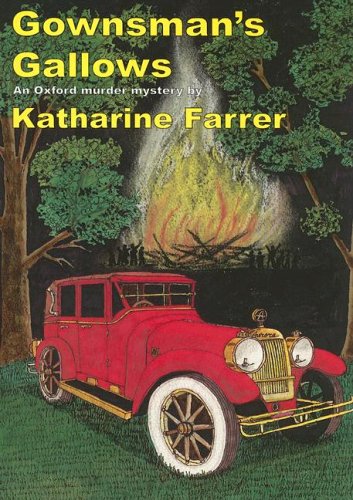
The third novel by Katherine Farrer


Katherine Farrer :  Morte di un Fantasma (Gownsman’s Gallows, 1957) – trad. Mario Rivoire – I Romanzi del Corriere N.40 del 1 aprile 1958.


Katherine (Newton) Farrer , is a name unknown to most. She wrote only three novels : The Missing Link ( 1952) , The Cretan Counterfeit ( 1954) and Gownsman 's Gallows (1957).
Katherine was born in 1911 in Wiltshire, and you can tell that all her life gravitated into the environment of Oxford, where she attended school , and then where she taught . The fact that her father, F.H.J. Newton was an Anglican pastor , led her to marry one of the greatest Anglicans theologians of the twentieth century , Austin Farrer , who taught at Oxford until his death in 1968.
Austin and Katherine were part of the Inklings , a group of scholars who disliked scientific materialism , formed among others by JRR Tolkien , by the poet and novelist Charles Williams , Dorothy L. Sayers and CS Lewis.
 

Dorothy Sayers

Unfortunately Farrer often suffered from pneumonia and bronchitis , all exacerbated by a heavy smoking habit . For this habit, she drank alcoholics and she took barbiturates , ending early in her career as a writer. She died in 1972.[1]
Gownsman 's Gallows is her third and final novel.


The novel begins with two brothers who walk in their car outside of the Oxford College , where studied Tim Dawson - Gowner . At some point feel a jolt and then the older brother of the two, Nigel , he sees a man lying on the road : someone is passed over. While he doesn’t believes that may have been his brother to kill him, he convinces him to flee to France , and he shall burn the corpse in a barn . However, the body does not burn completely : you can store your feet . What does the Inspector Ringwood , in charge of the investigation ? He makes his bitch Ratter smell the feet of the dead, so the bitch can take him where supposedly the man was killed , because no one thinks that the barn could be the site of the murder .
The fact is that the socks seem to lead to a gentleman, that is a student at Oxford , but for the time of presumed murder he has an airtight alibi . He often reveals he had loaned his clothings to another person, which in turn will prove being a blackmailer . His traces will lead in France , so even Ringwood embarks to turn .
In Touraine he met a French policeman , Monsieur Kehidiou, who promises full cooperation . Ringwood, is almost convinced that the victim is Despuys but in France seeking endorsements to his thesis . He learns that his sister lives there , a woman  who is a whore, outcast from the local community , because, during the II World War, she had become the woman of a torturer of partisans , Maxime Fleurat , an ex- professor . Everything seems to bring him, that someone said to have fled to England. But Nigel is also active in France , with a strange kind of place : during the war he was an infiltrator in the English resistance, but after the war he was found full of money : someone insinuates that the escape of Fleurat can be linked to his strange enrichment.

Meanwhile the French policeman and Ringwood investigate , a tramp who the day before they had seen at the guardhouse , is found dead ... and naked : his clothes were stolen. Who could ever take the rags of a tramp ? Meanwhile, is questioned the sister of Despuys and while they interrogate her , Ringwood has the impression that there is someone in the house, upstairs. But when they search the house, they can not find anyone . The fact is that she hides her ex lover, reappeared after years on the run . She is afraid but at the same time she hide him. She will die, and Maxime will take her savings, that she had hidded in a hole in the cabinet .

In a frantic final,  all truth will be spilled over again, even doubting that the victim in Oxford was Despuys , and that the man who everyone think can be Fleurat, be another . The solution will appear as a distant ray of light , mingling to the knowledge of Fleurat about the Oxfordian environment .
Novel “river”, which begins in tone , with a style sometimes too redundant , then take pace and continue with a march shipped until the final solution ,
Gownsman’s Gallows is a tight procedural , with more the movements of a thriller than those of a novel with enigma , but extremely complex : the writer melees events of the war , espionage, blackmail , noir, in a plot very spectacular . It would seem the plot of a post-war French film , a film by Marcel Carné , so the characters seem distraught . There is also a love story between Nigel and Juliette in France , and hints very free-range , such as when the dog smells the feet of the corpse : a mixture of fetishism and necrophilia , we would say , that would seem not be easily reconciled with a person like Katherine Farrer , daughter of a theologian and wife of a theologian. But yet this irreverent picture, gives freshness at the beginning of novel that it would seem tedious.
Interesting is the Oxfordian setting , but not too much. Before her, from Dorothy L. Sayers to Edmund Crispin , from Masterman to Blake , several Oxfordian writers had written novels . However, if some of them are masters at depicting the life of the college, and its environments (i.e. Crispin and Masterman ) , the Farrer is at her ease in describing everyday life.
To give freshness and at the same time marry the territoriality of the Ringwood French trip in Touraine, several dialogues are in French . This is also a consequence of the fact that much of the book takes place in a territory not English. However, if it is true that does not make much sense to write a sentence in French and one hundred in English, it is also true that Katherine Farrer liked the French, and that she cunningly hid some clue in french dialogues. If Jacques Barzun , about the subject of the novel, expressed in relation to a use of French language  not quite correct (and this is undoubtedly true ) , you also must say that a form not quite exact , gives immediacy to the dialogues , as if they were been written thinking to talking instead of writing.
Furthermore, cleaved deeply human and sad , accompany equally humorous glimpses, for example those related to the relationship between Ringwood and his bitch, or
the strange methods of investigation by Ringwood (even though the result of his innate acumen) as opposed to those rigorous by the French police, proud of its organization and of anthropometric informations contained in its files.


Pietro De Palma


[1] More informations to :  http://www.ruemorguepress.com/authors/farrer.html


Saturday, October 19, 2013

The 1981 Edward D. Hoch Locked Rooms Meeting

The Edward D.Hoch Locked Rooms List

Immagine


In 1981, Ed Hoch, who had published an anthology of short stories with Locked Rooms titled Diagnosis: Impossible. The problem of Dr. Sam Hawthorne, wanting to effect complete with an introduction, summoned the 17 best crime novels authors of authors and critics of America, so that would create a ranking of the best novels with ideal impossible crimes.
Here, below, the list of the 15 best Locked Rooms, as it was drawn up on that occasion:

  1) John Dickson Carr -  The Three Coffins
  2) Hake Talbot – Rim of the Pit
  3) Gaston Leroux – The Mystery of the Yellow Room
  4) John Dickson Carr – The Crooked Hinge
  5) Carter Dickson – The Judas Window
  6) Israel Zangwill – The Big Bow Mystery
  7) Clayton Rawson – Death From a Top Hat
  8) Ellery Queen – The Chinese Orange Mystery
  9) Anthony Boucher – Nine Times Nine
10) Carter Dickson – The Peacock Feather Murders
11) Ellery Queen – The King is Dead
12) Helen McCloy – Through a Glass Darkly
13) Carter Dickson – He Wouldn’t Kill Patience
14) Randall Garrett – Too Many Magicians
15) John Sladek – Invisible Green 

As reported by John Pugmire in his excellent article titled “A Locked Room Library”:
 They were each invited to name their favourite works, up to ten in number, ranked in order of preference. ( http://mysteryfile.com/Locked_Rooms/Library.html ).
John Pugmire added that, in spite of numerous French authors had written large Locked Rooms, only a French novel was included in this list (at the 3rd place): Gaston Leroux - The Mystery of the Yellow Room.
The novel, which had been appointed by Carr himself as the greatest novel of Locked Rooms that had been written (Carr was very modest: in fact, when someone asked to name novels that somehow he had considered having to be reported, he did not fit ever his works, despite being the largest in number and quality of novels), oddly enough was the only Frenchman to be inserted. The reason given by John (that very few French novels were translated in America) does not honor American publishing, and the same critical, since it is clear that no one had heard indispensable also read works that were not only written in English: if one loves a genre, and wanted to extend his range of readings, he could obtain other works are not translated into his own language. Of course should also know other languages, which leads us to other obvious considerations (!), when we learn that no one had done, in their rankings, the name of French authors and their works, except just Gaston Leroux, and Pierre Boileau (The Repos de Bacchus), but only because the latter was probably served to Hilary St.George Saunders as the basis for his novel, very similar, The Sleeping Bacchus.
Now, this lack seems to me very strange: it is possible that no truly great American authors and critics, who were invited at that occasion
( Robert Adey, Jack Adrian, Jacques Barzun, Jon L. Breen, Robert E. Briney, Jan Broberg, Frederick Dannay, Douglas G. Greene, Howard Haycraft, Edward D. Hoch, Marvin Lachman, Richard Levinson & William Link, Francis M. Nevins, Jr., Otto Penzler, Bill Pronzini, Julian Symons, and Donald A. Yates ), did they read other novels by French authors? Possible that none among they had read La Maison Interdite by Michel Herbert & Eugene Wyl ? Or La Maison qui Tue by Noel Vindry? Or Les Quatre Vipères by Pierre Very?
Not with these reasons, but basically, also John Pugmire questioned himself about it and he made ​​known it to his readers:
“This was scarcely surprising for – with the exception of Leroux’s work and Pierre Boileau’s “Repos de Bacchus”– almost none had been translated into English.  By contrast, a great many English-language works had been, and still are, routinely translated into French, which gives French readers a far wider range of choice than that available to Anglophones”.                                  (http://mysteryfile.com/Locked_Rooms/Library.html ).
I do not understand why no one in America had felt the need to fill gaps related to foreign novels: in this, I believe that we Italians are more open to new, perhaps because, unlike the French or the Anglophones, churned out novels of absolute relief, we have produced little, and then we have assimilated by others; they instead, churning out a lot, perhaps, hadn’t the same need to know what others had written abroad (not denying that someone still this urge not hear it!). Thus, both the French and the Americans among Anglophones do not know that even an Italian writer, Franco Valiati, back in 1939, he published a novel, The Mystery of the Seaplane, which contained a Locked Room quite interesting.
Possible only with us, these authors and these novels in a lot of years, before the Second World War, had been translated and published, while elsewhere, i.e in America, they did not know who these writers were?
It’s no doubt that anyone who was aware about this, he would ask himself if he had any insight. (!)
An American blogger friend of mine, and among other things bookseller, John Norris, he voiced his thought about the issue, pointing out, that :
“Pietro, these are only my opinions and not actual facts”.
Ok, John. It ‘s just a comment, but it seems very interesting, and for this, publishing,it,  I use it to make a more general my reflection about the theme.
“The obvious answer is that those critics cannot read the original language in which the book was written and published. Not everyone cannot read French or German or Italian. Most of us have to wait for a translation to come out.
Why so few translations? I think it has always been about sales.  Long ago US publishers wouldn’t invest in a translated work unless it was proven seller either in the original language or in English translation in the UK.  Also, England has always been the leader in English translated works because of being part of a European marketplace. The US is a huge country and publishers have always ended to think of US books intended for US readers only.
I’d love to read the mystery novels of Noel Vindry, Jean Alessandrini, Gensoul & Grenier.  Waiting for someone to translate them into English, however, and then publish them is almost pointless.  Unless John Pugmire turns his translating talents to these books as well as Halter I don’t think I will ever see those books in English.
I think also some books do not translate well for a foreign audience or are so tied to a particular culture that a US publisher didn’t think the book would appeal to a US reader. They tended to look for universality in content.  In other words: can the US reader relate to the characters, find something similar in the story that will make them want to read the book?  Luckily, times change and we have a much larger readership in the US who are eager and curious to read about other cultures. It’s only fairly recently that US publishers have bothered to think more globally and recognize there are indeed readers who hunger for stories from outside the US simply because they are foreign”.

In the comment by John Norris , I read, however, also a kind of critique of American editorial policy, which has influenced the choices of that group of critics. What John says , in my opinion, is that in America until some time ago ( not now that you have moved on a market is global , but nevertheless the trends remain ) was published in American language something alien who had been previously translated into England.
So if anything, we should ask ourselves why in England the works of French are not been so translated. This could also be explained by a certain mistrust that existed between the French and English cousins ​​, always willing to each other to establish themselves in Europe, and also culturally to prevail over each other . So you might think that this trend was more English than French, if it is true that several British and American works have been translated into French ( and included in the list by Lacourbe ) , while no French work has been translated into English ( missing except Leroux and Leblanc ) and therefore absent in that by Hoch .
At this point I make my reflections on the provision of the first list , announcing that after this article will be followed other two: the first will consider the list by Lacourbe and the second that by Scott. Then , I shall make a my Locked Rooms shortlist , which I consider essential reading for any lover of this genre.
What you notice ( not only thing that I notice , but anyone can do it ) is that a list of 15 novels, is a bit  skimpy , in practice should be the best of the best . However jump out that some by the participants were famous writers : Dannay ( Ellery Queen), Boucher (even critical ) , Pronzini , Hoch; the others were also crime ficion critics : Nevins (critic by Ellery Queen), Greene ( especially critic by Carr ) Symons ( critic who did not particularly like the classic mystery ), and then a varied number of critics : Barzun , Robert Adey ( author of the most important study ever on Locked Rooms ) , Jack Adrian ( curator along with Adey of a fundamental anthology of short little known stories) , Levinson & Link ( classic TV detective series producers, as Columbus, Mannix, Ellery Queen, for example) , Howard Haycraft (famous critic) .
All, however, leaving out Adey, and perhaps Greene (who, as biographer and maximum connoisseur of Carr still had to be practical about Locked Rooms), were extemporaneous connoisseurs of Locked Rooms and then only at some of them: I do not think, in fact, that Symons, who also was one of the most important critics of all times, or Boucher, were experts Locked Rooms. If anything, they were well aware of some authors of Locked Rooms.
In fact, the list is made ​​up of works by well-known authors, and repetitions of works by some of them, can be ascribed in my opinion, rather the real and undisputed quality of the same, than to a tendency to exalt those who were considered the cornerstones of American Crime Fiction.
The only repetition of which I would not have objected, i.e. that of works by Carr, would have been untouchable only in the case where the list had included all the authors and works really fundamental in the genre. And then, in the amount, certainly more titles by Carr would have been legitimate. Here, instead, would be sufficient only two fundamental novels by Carr: The Hollow Man and The Judas Window.
In fact I do not see among the works, some American Locked Rooms very important, even historically, but not very well known (because their authors are not) among the general public:
The Thinking Machine (1907) by Jacques Futrelle [1]; Into Thin Air (1928) by Winslow & Quirk, and the novels by vandinian writers: The Canary Murder Case (1927) and  The Kennel Murder Case (1933) by  S.S. Van Dine; Obelists Fly High (1935), Careless Corpse: A Thanatophony (1937)  and  Arrogant Alibi (1938),by Charles Daly King;  The Man from Tibet (1938) by Clyde B. Clason; The Red Right Hand (1945) by  Joel Townsley Rogers.   
We therefore aren’t surprised if there aren’t novels as The Shade of Time (1942) by David Duncan, or The Devil Drives (1932) by Virgil Markham!
Then there aren’t - and this is, together with the lack of French authors, the data that immediately jumps to the eyes - major works by major British authors, New Zealanders, Australians, etc.. i.e. authors by the British Commonwealth:
The Woman in the Wardrobe (1951) by A. & P. Shaffer; Whisle Up The Devil (1953) by Derek Smith; The Gilded Fly (1944) and The Moving Toyshop (1946) by Edmund Crispin; Suddenly at His Residence (1946), Death of Jezebel (1948), Tour De Force (1955),by Christianna Brand; Off With His Head (1957) by Ngaio Marsh; at least, Why Didn’t They Ask Evans? (1935) ,  Murder in Mesopotamia (1936), Murder for Christmas (1938), by Agatha Christie; The Layton Court Mystery (1925) by A. Berkeley; The Rynox Murder Mystery (1930) and  The Polferry Riddle Mystery (1931) by Philip MacDonald; Policeman’s Evidence (1938) and Sealed Room Murder (1951), by Rupert Penny ; at least, Murder of a Lady (1931), The Case of the Green Knife (1932),  The Case of the Gold Coins (1933) , The Toll House Mystery (1935), by Anthony Wynne; Sudden Death (1932) by  Freeman Wills Crofts.
Not to mention those other British authors less well known but whose works (sometimes only one) still enough to remember them: for example The Death of Laurence Vining (1924) by Alan Thomas, or Darkness at Pemberley (1932) of T.H.White.
In other words, with the exclusion of Zangwill (initiator of this genre, could be said) and Leroux (accredited by Carr), the list appeared only formed by the works by American authors, known. It is suspected that those critics and writers who extended their list of preferences, did not know several other works. This resulted in a basic idea completely misleading: that only in America were written decent Locked Rooms. And for more than a few known authors: an absurdum!
So,  we are faced with a list of works by American authors (with two exceptions) which by its nature could not aspire to be referred to as “the reference list.”
Nothing to complain about the first place awarded to The Three Coffins / The Hollow Man by Carr : for the atmosphere that is contained, the complexity of the puzzles and the famous Conference by Dr. Fell, a good reason may deserve the top spot. However, if a few years ago the position of this novel was clear supremacy , currently other critics ( including myself ) propose , for the same genius enigma , for the atmosphere and the sheer simplicity of explanation of a done absolutely impossible, another novel by Carr (aka Carter Dickson ), which figures in this list at fifth place : The Judas Window .
At second place it is Rim of the Pit by Hake Talbot:  also about this novel, I would observe that in my opinion ( but I’ve found that other reviewers think the same way as Mauro Boncompagni and Philippe Fooz ) a place would had to earn The Hangman ‘s Handyman by Hake Talbot, the first of two novels written by the author , and instead blatantly missing . In my opinion you would have prefer it to the other, because of the very dense atmosphere of the novel , as Rim of The Pit , but also for of the Locked Room, absolutely brilliant , which inspired many other later, and the impossibility of the curse ( a corpse decomposes in a few hours ) explained with an eminently hallucinatory and yet absolutely simple to understand, unlike the other novel, which in the face of so many problems accumulated during the reading, can not give them a logical and understandable explanation , often climbing on mirrors. The reason because was entered Rim of the Pit and not the other novel, lies in the fact that his literary quality was sponsored by none other than himself Carr , who had dwelt in its quality . Since Carr was number one in the consideration of those critics ( and he truly is , to date , the largest ever in my opinion) , it follows that his judgments were accepted without question.
About the novels put in positions from 3^ to 7 ^ ,  I do not put your mouth, except that in my opinion , perhaps it would be more just an exchange between the 4th and 6th : the novel by Zangwill , historically is much more important than the novel by Carr presented there, also because for the era in which it was written , the solution was absolutely revolutionary; and novel of the same Rawson , whose Locked Rooms , are absolutely extraordinary , on the same level of imagination of those Carr’s most renowned , also if they lose something only on the level of atmosphere, in my opinion I would have added it to the 5th place, while The Judas Window by Carr , as mentioned earlier , I would have joined to the novel put at the first place, The Hollow Man.
We arrive at Ellery Queen: in my opinion, the two novels proposed , The Chinese Orange Mystery and The King Is Dead could have been well not be there !
I understand that someone will consider me crazy, but to me those novels never seemed significant in the group of Locked Rooms : first, to want to be picky , The Chinese Orange Mystery , Locked Room just is not because the door of the antechamber is not closed : if anything, are the situations that introduce a puzzling situation ; also The King is Dead , is not really a big Locked Room . If you really had wanted to include an emblazoned novel , one would have to mention The Door Between, the only proper Locked Room by Ellery Queen . But you know, at that meeting attended Dannay ( the most imaginative member of the two authors hidden behind the brand Ellery Queen) and Nevins ( author of the most celebrated work of criticism about Ellery Queen) and Symons : it could be argued then because could be been selected precisely those two novels : the first belongs to  phenomenal ten novels, the second belongs to phase which so pleased to Symons: novels with a more psychological rather than deductive .
Ditto for Boucher, huge critical and remarkable writer. However Nine Times Nine is still a very nice Locked Room , also for references to the Locked Room-Lecture by Fell . However, I would point to the same quid Boucher valid for Dannay : to be truly impartial that group of critics would not have included inside two authors whose novels would have figured in the list.
About the novelsat positions 10and 11I have nothingto say.In fact, I want to add thatI would haveaddedanother greatnovel byCarr,strangelyabsent here: The WhitePrioryMurders, the grand Locked Roomfor the firsttimeputinto be the bigtrickof thesnowy meadow, almost become arecognizable traitof the production byCarrand thenchangedmany times(sand, soil, clay courts,a tennis court, etc. ..).
HerethenHelenMcCloy. HerThrough a Glass,Darklywasconsidered by many a lockedroom:in my opinionis a novelto fantasy, whose locked roomis also quite simple, and has nothingspectacular to beconsideredone of the best15lockedroomsever!I would havedefinitelyreplacedwithatrulyepochalnovel, unfortunately absent inItaly, The Woman in the Wardrobe by the BrothersShaffer.
About HeWould NotKillPatience, nothing to complain.
Ditto for Garrett.
Finally, sincethe candidacy byJohnSladekseemssacrosanct, I would have preferredtoInvisibleGreen, thenext novel,BlackAura,ahigher quality novel which containstwomajorproblemsreallysolvedwith greatnonchalance.
Before concluding, I feel obliged to make a reflection about the novels of Carr, also urged by a comment posted by a friend, Stefano Serafini , on Italian blog where I published this article in the first place .
Stephen emphasized among other things , the presence of a value judgment attached to the novels on the list , which “can give space to harsh criticism and controversial : in fact, he has not been repeated ,” and as a list of 15 novels, was quite restrictive . Also remarked one point about I also told my thinking about Carr :
“The Master here has basically 5 slot , otherwise there would be no race: in fact, in the first draft of the list by Lacourbe (The 99 Chambres Closes, 1991) Carr does not appear , nor he doesn’t appear in the 15 best mystery of all time chosen by Adey . Because it would not make sense . Therefore to create a compromise , as in this case , between non to insert Carr and to add him at will , inevitably becomes restrictive”
I would then bring back my reflection in the wake of the comments by Stefano, although it could go beyond the discourse about the subject.
The comments by Stefano gives me the opportunity to expand , albeit in this area  the terms of the issue. Stefano understood what I was getting :
Immagine
Carr is the cornerstone of the building. If you take Carr, it will be reflected about the lawfulness of his exclusion , and if you don’t include him, it will be reflected about the weight that it should have had, about which novel to insert and which to remove . That’s because creating a list is always a question mark : the best thing for me, it would create a list not susceptible of ranking, and do not put Carr in this general list , reserving him a sort of preferential roadway , a container in which novels by Carr with meritorious Locked Rooms could be remembered.
The list by Hoch inserts  5 novels by Carr among the top 15 .
About the lawfulness of choice I don’t discuss . However in my opinion , four titles are sacrosanct , while the fifth ( as the solution to come as a slap ) , in the light of the novel by Zangwill, before Carr, present in the list , it would seem  to be a kind of illustrious citation. I’m speaking about The Peacock Feather Murders.
I would add The White Priory Murders or even The Problem of the Wire Cage or The Case of the Constant Suicides or even He Who Whispers or The Witch of the Low Tide .
As you can see , enter 5 titles by Carr it is strongly limited . Do not put it , even if it is a bold act , has led to a welter of criticism. As you can see .. the solution is obvious : removing Carr and inserting him at the same time .
Stephenalso asked mewhatwas the bestnovel by Sladekbetween the first his novel (Invisible Green) and the second his novel (Black Aura). I respond with a statement in which deeply believe, because I wrote short stories ( I wrote another recently , the development of a more ancient,  not yet published):
the best Sladek is not Black Aura, and even Invisible Greene, but … By Unknown Hand.
The Locked Room , it can be the great engine around which the novel runs (for example The Judas Window by Carter Dickson ) or it can be one of the engines of the novel ( Arrogant Alibi by C.D.King ) ..
But the novel is , by its very nature , highly dispersive : the novelist rarely succeeds , with the sole locked room to keep standing throughout the novel : very often he adds more locked rooms , or he creates subplots . This is because the history of the Locked Room and its solution , is by its very nature, more often than not mechanistic , deliberately restricted : it is an issue , which puts in place mechanisms logical- mathematical , disinclined to be regimented in a literary style .
That’s because I believe that the best way to illustrate a Locked Room is that by the short story : short, concise , detailed , who proposed the problem, gives the framing, a brief overview of the human environment on which it stands , and then . . gives the solution .
A short story with thirty – forty pages it is the best.
That’s because I controversially say that By an Unknown Hand by Sladek ( included in the collection Maps, edited by David Langford ) is the best I could find : an extraordinary plot , which comes on a solution equally extraordinary , but yet extremely simple. Although in its basic simplicity it seems bizarre .
In the novels by Carr there is plenty ofchoice. It’s in the case of others, that imposes the choice !

Immagine

Pietro De Palma

P.S.

Yet published on http://thenewinvisibleman.wordpress.com

[1] It isn’t a novel , but a series of short stories among which it’s  The Problem of Cell 13, one of the best locked room before Carr