Saturday, October 19, 2013

The 1981 Edward D. Hoch Locked Rooms Meeting

The Edward D.Hoch Locked Rooms List

Immagine


In 1981, Ed Hoch, who had published an anthology of short stories with Locked Rooms titled Diagnosis: Impossible. The problem of Dr. Sam Hawthorne, wanting to effect complete with an introduction, summoned the 17 best crime novels authors of authors and critics of America, so that would create a ranking of the best novels with ideal impossible crimes.
Here, below, the list of the 15 best Locked Rooms, as it was drawn up on that occasion:

  1) John Dickson Carr -  The Three Coffins
  2) Hake Talbot – Rim of the Pit
  3) Gaston Leroux – The Mystery of the Yellow Room
  4) John Dickson Carr – The Crooked Hinge
  5) Carter Dickson – The Judas Window
  6) Israel Zangwill – The Big Bow Mystery
  7) Clayton Rawson – Death From a Top Hat
  8) Ellery Queen – The Chinese Orange Mystery
  9) Anthony Boucher – Nine Times Nine
10) Carter Dickson – The Peacock Feather Murders
11) Ellery Queen – The King is Dead
12) Helen McCloy – Through a Glass Darkly
13) Carter Dickson – He Wouldn’t Kill Patience
14) Randall Garrett – Too Many Magicians
15) John Sladek – Invisible Green 

As reported by John Pugmire in his excellent article titled “A Locked Room Library”:
 They were each invited to name their favourite works, up to ten in number, ranked in order of preference. ( http://mysteryfile.com/Locked_Rooms/Library.html ).
John Pugmire added that, in spite of numerous French authors had written large Locked Rooms, only a French novel was included in this list (at the 3rd place): Gaston Leroux - The Mystery of the Yellow Room.
The novel, which had been appointed by Carr himself as the greatest novel of Locked Rooms that had been written (Carr was very modest: in fact, when someone asked to name novels that somehow he had considered having to be reported, he did not fit ever his works, despite being the largest in number and quality of novels), oddly enough was the only Frenchman to be inserted. The reason given by John (that very few French novels were translated in America) does not honor American publishing, and the same critical, since it is clear that no one had heard indispensable also read works that were not only written in English: if one loves a genre, and wanted to extend his range of readings, he could obtain other works are not translated into his own language. Of course should also know other languages, which leads us to other obvious considerations (!), when we learn that no one had done, in their rankings, the name of French authors and their works, except just Gaston Leroux, and Pierre Boileau (The Repos de Bacchus), but only because the latter was probably served to Hilary St.George Saunders as the basis for his novel, very similar, The Sleeping Bacchus.
Now, this lack seems to me very strange: it is possible that no truly great American authors and critics, who were invited at that occasion
( Robert Adey, Jack Adrian, Jacques Barzun, Jon L. Breen, Robert E. Briney, Jan Broberg, Frederick Dannay, Douglas G. Greene, Howard Haycraft, Edward D. Hoch, Marvin Lachman, Richard Levinson & William Link, Francis M. Nevins, Jr., Otto Penzler, Bill Pronzini, Julian Symons, and Donald A. Yates ), did they read other novels by French authors? Possible that none among they had read La Maison Interdite by Michel Herbert & Eugene Wyl ? Or La Maison qui Tue by Noel Vindry? Or Les Quatre Vipères by Pierre Very?
Not with these reasons, but basically, also John Pugmire questioned himself about it and he made ​​known it to his readers:
“This was scarcely surprising for – with the exception of Leroux’s work and Pierre Boileau’s “Repos de Bacchus”– almost none had been translated into English.  By contrast, a great many English-language works had been, and still are, routinely translated into French, which gives French readers a far wider range of choice than that available to Anglophones”.                                  (http://mysteryfile.com/Locked_Rooms/Library.html ).
I do not understand why no one in America had felt the need to fill gaps related to foreign novels: in this, I believe that we Italians are more open to new, perhaps because, unlike the French or the Anglophones, churned out novels of absolute relief, we have produced little, and then we have assimilated by others; they instead, churning out a lot, perhaps, hadn’t the same need to know what others had written abroad (not denying that someone still this urge not hear it!). Thus, both the French and the Americans among Anglophones do not know that even an Italian writer, Franco Valiati, back in 1939, he published a novel, The Mystery of the Seaplane, which contained a Locked Room quite interesting.
Possible only with us, these authors and these novels in a lot of years, before the Second World War, had been translated and published, while elsewhere, i.e in America, they did not know who these writers were?
It’s no doubt that anyone who was aware about this, he would ask himself if he had any insight. (!)
An American blogger friend of mine, and among other things bookseller, John Norris, he voiced his thought about the issue, pointing out, that :
“Pietro, these are only my opinions and not actual facts”.
Ok, John. It ‘s just a comment, but it seems very interesting, and for this, publishing,it,  I use it to make a more general my reflection about the theme.
“The obvious answer is that those critics cannot read the original language in which the book was written and published. Not everyone cannot read French or German or Italian. Most of us have to wait for a translation to come out.
Why so few translations? I think it has always been about sales.  Long ago US publishers wouldn’t invest in a translated work unless it was proven seller either in the original language or in English translation in the UK.  Also, England has always been the leader in English translated works because of being part of a European marketplace. The US is a huge country and publishers have always ended to think of US books intended for US readers only.
I’d love to read the mystery novels of Noel Vindry, Jean Alessandrini, Gensoul & Grenier.  Waiting for someone to translate them into English, however, and then publish them is almost pointless.  Unless John Pugmire turns his translating talents to these books as well as Halter I don’t think I will ever see those books in English.
I think also some books do not translate well for a foreign audience or are so tied to a particular culture that a US publisher didn’t think the book would appeal to a US reader. They tended to look for universality in content.  In other words: can the US reader relate to the characters, find something similar in the story that will make them want to read the book?  Luckily, times change and we have a much larger readership in the US who are eager and curious to read about other cultures. It’s only fairly recently that US publishers have bothered to think more globally and recognize there are indeed readers who hunger for stories from outside the US simply because they are foreign”.

In the comment by John Norris , I read, however, also a kind of critique of American editorial policy, which has influenced the choices of that group of critics. What John says , in my opinion, is that in America until some time ago ( not now that you have moved on a market is global , but nevertheless the trends remain ) was published in American language something alien who had been previously translated into England.
So if anything, we should ask ourselves why in England the works of French are not been so translated. This could also be explained by a certain mistrust that existed between the French and English cousins ​​, always willing to each other to establish themselves in Europe, and also culturally to prevail over each other . So you might think that this trend was more English than French, if it is true that several British and American works have been translated into French ( and included in the list by Lacourbe ) , while no French work has been translated into English ( missing except Leroux and Leblanc ) and therefore absent in that by Hoch .
At this point I make my reflections on the provision of the first list , announcing that after this article will be followed other two: the first will consider the list by Lacourbe and the second that by Scott. Then , I shall make a my Locked Rooms shortlist , which I consider essential reading for any lover of this genre.
What you notice ( not only thing that I notice , but anyone can do it ) is that a list of 15 novels, is a bit  skimpy , in practice should be the best of the best . However jump out that some by the participants were famous writers : Dannay ( Ellery Queen), Boucher (even critical ) , Pronzini , Hoch; the others were also crime ficion critics : Nevins (critic by Ellery Queen), Greene ( especially critic by Carr ) Symons ( critic who did not particularly like the classic mystery ), and then a varied number of critics : Barzun , Robert Adey ( author of the most important study ever on Locked Rooms ) , Jack Adrian ( curator along with Adey of a fundamental anthology of short little known stories) , Levinson & Link ( classic TV detective series producers, as Columbus, Mannix, Ellery Queen, for example) , Howard Haycraft (famous critic) .
All, however, leaving out Adey, and perhaps Greene (who, as biographer and maximum connoisseur of Carr still had to be practical about Locked Rooms), were extemporaneous connoisseurs of Locked Rooms and then only at some of them: I do not think, in fact, that Symons, who also was one of the most important critics of all times, or Boucher, were experts Locked Rooms. If anything, they were well aware of some authors of Locked Rooms.
In fact, the list is made ​​up of works by well-known authors, and repetitions of works by some of them, can be ascribed in my opinion, rather the real and undisputed quality of the same, than to a tendency to exalt those who were considered the cornerstones of American Crime Fiction.
The only repetition of which I would not have objected, i.e. that of works by Carr, would have been untouchable only in the case where the list had included all the authors and works really fundamental in the genre. And then, in the amount, certainly more titles by Carr would have been legitimate. Here, instead, would be sufficient only two fundamental novels by Carr: The Hollow Man and The Judas Window.
In fact I do not see among the works, some American Locked Rooms very important, even historically, but not very well known (because their authors are not) among the general public:
The Thinking Machine (1907) by Jacques Futrelle [1]; Into Thin Air (1928) by Winslow & Quirk, and the novels by vandinian writers: The Canary Murder Case (1927) and  The Kennel Murder Case (1933) by  S.S. Van Dine; Obelists Fly High (1935), Careless Corpse: A Thanatophony (1937)  and  Arrogant Alibi (1938),by Charles Daly King;  The Man from Tibet (1938) by Clyde B. Clason; The Red Right Hand (1945) by  Joel Townsley Rogers.   
We therefore aren’t surprised if there aren’t novels as The Shade of Time (1942) by David Duncan, or The Devil Drives (1932) by Virgil Markham!
Then there aren’t - and this is, together with the lack of French authors, the data that immediately jumps to the eyes - major works by major British authors, New Zealanders, Australians, etc.. i.e. authors by the British Commonwealth:
The Woman in the Wardrobe (1951) by A. & P. Shaffer; Whisle Up The Devil (1953) by Derek Smith; The Gilded Fly (1944) and The Moving Toyshop (1946) by Edmund Crispin; Suddenly at His Residence (1946), Death of Jezebel (1948), Tour De Force (1955),by Christianna Brand; Off With His Head (1957) by Ngaio Marsh; at least, Why Didn’t They Ask Evans? (1935) ,  Murder in Mesopotamia (1936), Murder for Christmas (1938), by Agatha Christie; The Layton Court Mystery (1925) by A. Berkeley; The Rynox Murder Mystery (1930) and  The Polferry Riddle Mystery (1931) by Philip MacDonald; Policeman’s Evidence (1938) and Sealed Room Murder (1951), by Rupert Penny ; at least, Murder of a Lady (1931), The Case of the Green Knife (1932),  The Case of the Gold Coins (1933) , The Toll House Mystery (1935), by Anthony Wynne; Sudden Death (1932) by  Freeman Wills Crofts.
Not to mention those other British authors less well known but whose works (sometimes only one) still enough to remember them: for example The Death of Laurence Vining (1924) by Alan Thomas, or Darkness at Pemberley (1932) of T.H.White.
In other words, with the exclusion of Zangwill (initiator of this genre, could be said) and Leroux (accredited by Carr), the list appeared only formed by the works by American authors, known. It is suspected that those critics and writers who extended their list of preferences, did not know several other works. This resulted in a basic idea completely misleading: that only in America were written decent Locked Rooms. And for more than a few known authors: an absurdum!
So,  we are faced with a list of works by American authors (with two exceptions) which by its nature could not aspire to be referred to as “the reference list.”
Nothing to complain about the first place awarded to The Three Coffins / The Hollow Man by Carr : for the atmosphere that is contained, the complexity of the puzzles and the famous Conference by Dr. Fell, a good reason may deserve the top spot. However, if a few years ago the position of this novel was clear supremacy , currently other critics ( including myself ) propose , for the same genius enigma , for the atmosphere and the sheer simplicity of explanation of a done absolutely impossible, another novel by Carr (aka Carter Dickson ), which figures in this list at fifth place : The Judas Window .
At second place it is Rim of the Pit by Hake Talbot:  also about this novel, I would observe that in my opinion ( but I’ve found that other reviewers think the same way as Mauro Boncompagni and Philippe Fooz ) a place would had to earn The Hangman ‘s Handyman by Hake Talbot, the first of two novels written by the author , and instead blatantly missing . In my opinion you would have prefer it to the other, because of the very dense atmosphere of the novel , as Rim of The Pit , but also for of the Locked Room, absolutely brilliant , which inspired many other later, and the impossibility of the curse ( a corpse decomposes in a few hours ) explained with an eminently hallucinatory and yet absolutely simple to understand, unlike the other novel, which in the face of so many problems accumulated during the reading, can not give them a logical and understandable explanation , often climbing on mirrors. The reason because was entered Rim of the Pit and not the other novel, lies in the fact that his literary quality was sponsored by none other than himself Carr , who had dwelt in its quality . Since Carr was number one in the consideration of those critics ( and he truly is , to date , the largest ever in my opinion) , it follows that his judgments were accepted without question.
About the novels put in positions from 3^ to 7 ^ ,  I do not put your mouth, except that in my opinion , perhaps it would be more just an exchange between the 4th and 6th : the novel by Zangwill , historically is much more important than the novel by Carr presented there, also because for the era in which it was written , the solution was absolutely revolutionary; and novel of the same Rawson , whose Locked Rooms , are absolutely extraordinary , on the same level of imagination of those Carr’s most renowned , also if they lose something only on the level of atmosphere, in my opinion I would have added it to the 5th place, while The Judas Window by Carr , as mentioned earlier , I would have joined to the novel put at the first place, The Hollow Man.
We arrive at Ellery Queen: in my opinion, the two novels proposed , The Chinese Orange Mystery and The King Is Dead could have been well not be there !
I understand that someone will consider me crazy, but to me those novels never seemed significant in the group of Locked Rooms : first, to want to be picky , The Chinese Orange Mystery , Locked Room just is not because the door of the antechamber is not closed : if anything, are the situations that introduce a puzzling situation ; also The King is Dead , is not really a big Locked Room . If you really had wanted to include an emblazoned novel , one would have to mention The Door Between, the only proper Locked Room by Ellery Queen . But you know, at that meeting attended Dannay ( the most imaginative member of the two authors hidden behind the brand Ellery Queen) and Nevins ( author of the most celebrated work of criticism about Ellery Queen) and Symons : it could be argued then because could be been selected precisely those two novels : the first belongs to  phenomenal ten novels, the second belongs to phase which so pleased to Symons: novels with a more psychological rather than deductive .
Ditto for Boucher, huge critical and remarkable writer. However Nine Times Nine is still a very nice Locked Room , also for references to the Locked Room-Lecture by Fell . However, I would point to the same quid Boucher valid for Dannay : to be truly impartial that group of critics would not have included inside two authors whose novels would have figured in the list.
About the novelsat positions 10and 11I have nothingto say.In fact, I want to add thatI would haveaddedanother greatnovel byCarr,strangelyabsent here: The WhitePrioryMurders, the grand Locked Roomfor the firsttimeputinto be the bigtrickof thesnowy meadow, almost become arecognizable traitof the production byCarrand thenchangedmany times(sand, soil, clay courts,a tennis court, etc. ..).
HerethenHelenMcCloy. HerThrough a Glass,Darklywasconsidered by many a lockedroom:in my opinionis a novelto fantasy, whose locked roomis also quite simple, and has nothingspectacular to beconsideredone of the best15lockedroomsever!I would havedefinitelyreplacedwithatrulyepochalnovel, unfortunately absent inItaly, The Woman in the Wardrobe by the BrothersShaffer.
About HeWould NotKillPatience, nothing to complain.
Ditto for Garrett.
Finally, sincethe candidacy byJohnSladekseemssacrosanct, I would have preferredtoInvisibleGreen, thenext novel,BlackAura,ahigher quality novel which containstwomajorproblemsreallysolvedwith greatnonchalance.
Before concluding, I feel obliged to make a reflection about the novels of Carr, also urged by a comment posted by a friend, Stefano Serafini , on Italian blog where I published this article in the first place .
Stephen emphasized among other things , the presence of a value judgment attached to the novels on the list , which “can give space to harsh criticism and controversial : in fact, he has not been repeated ,” and as a list of 15 novels, was quite restrictive . Also remarked one point about I also told my thinking about Carr :
“The Master here has basically 5 slot , otherwise there would be no race: in fact, in the first draft of the list by Lacourbe (The 99 Chambres Closes, 1991) Carr does not appear , nor he doesn’t appear in the 15 best mystery of all time chosen by Adey . Because it would not make sense . Therefore to create a compromise , as in this case , between non to insert Carr and to add him at will , inevitably becomes restrictive”
I would then bring back my reflection in the wake of the comments by Stefano, although it could go beyond the discourse about the subject.
The comments by Stefano gives me the opportunity to expand , albeit in this area  the terms of the issue. Stefano understood what I was getting :
Immagine
Carr is the cornerstone of the building. If you take Carr, it will be reflected about the lawfulness of his exclusion , and if you don’t include him, it will be reflected about the weight that it should have had, about which novel to insert and which to remove . That’s because creating a list is always a question mark : the best thing for me, it would create a list not susceptible of ranking, and do not put Carr in this general list , reserving him a sort of preferential roadway , a container in which novels by Carr with meritorious Locked Rooms could be remembered.
The list by Hoch inserts  5 novels by Carr among the top 15 .
About the lawfulness of choice I don’t discuss . However in my opinion , four titles are sacrosanct , while the fifth ( as the solution to come as a slap ) , in the light of the novel by Zangwill, before Carr, present in the list , it would seem  to be a kind of illustrious citation. I’m speaking about The Peacock Feather Murders.
I would add The White Priory Murders or even The Problem of the Wire Cage or The Case of the Constant Suicides or even He Who Whispers or The Witch of the Low Tide .
As you can see , enter 5 titles by Carr it is strongly limited . Do not put it , even if it is a bold act , has led to a welter of criticism. As you can see .. the solution is obvious : removing Carr and inserting him at the same time .
Stephenalso asked mewhatwas the bestnovel by Sladekbetween the first his novel (Invisible Green) and the second his novel (Black Aura). I respond with a statement in which deeply believe, because I wrote short stories ( I wrote another recently , the development of a more ancient,  not yet published):
the best Sladek is not Black Aura, and even Invisible Greene, but … By Unknown Hand.
The Locked Room , it can be the great engine around which the novel runs (for example The Judas Window by Carter Dickson ) or it can be one of the engines of the novel ( Arrogant Alibi by C.D.King ) ..
But the novel is , by its very nature , highly dispersive : the novelist rarely succeeds , with the sole locked room to keep standing throughout the novel : very often he adds more locked rooms , or he creates subplots . This is because the history of the Locked Room and its solution , is by its very nature, more often than not mechanistic , deliberately restricted : it is an issue , which puts in place mechanisms logical- mathematical , disinclined to be regimented in a literary style .
That’s because I believe that the best way to illustrate a Locked Room is that by the short story : short, concise , detailed , who proposed the problem, gives the framing, a brief overview of the human environment on which it stands , and then . . gives the solution .
A short story with thirty – forty pages it is the best.
That’s because I controversially say that By an Unknown Hand by Sladek ( included in the collection Maps, edited by David Langford ) is the best I could find : an extraordinary plot , which comes on a solution equally extraordinary , but yet extremely simple. Although in its basic simplicity it seems bizarre .
In the novels by Carr there is plenty ofchoice. It’s in the case of others, that imposes the choice !

Immagine

Pietro De Palma

P.S.

Yet published on http://thenewinvisibleman.wordpress.com

[1] It isn’t a novel , but a series of short stories among which it’s  The Problem of Cell 13, one of the best locked room before Carr

Friday, August 30, 2013

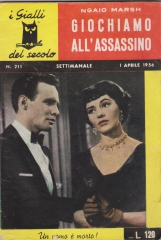
A Shadow Locked Room: "A Man Lay Dead", by Ngaio Marsh (1934)


Today I will discuss a novel by Ngaio Marsh, an outstanding essay writing and genius.
A Man Lay Died, is her first work. It was published in 1934.
It 'a jumble of ideas, each in itself interesting: ancient weapons and bloody, secret societies, three Russians who plot and a crime inexplicable. Ideas that strangely created confusion but instead are blended beautifully. The fact is however that in this case we are dealing with one of the major writers of the 900 is not only famous for his crime novels but also for his work in theater. In fact, I can say, without fear of being contradicted, that this his first novel, a play that is both a detective novel: it has such a high level of performance and representation, to be left stunned. And there is such a level of orchestration, with attention to detail, do not leave disappointed.
Sir Hubert Handesley is famous for his festivals, unforgettable. He called this time his niece Angela North; Charles Rankin a man old 46-47 years,  inveterate Playboy; Nigel Bathgate, cousin of Rankin and gossip reporter; Rosamund Grant, a great beautiful woman; and finally Arthur Wilde archaeologist, and his wife Marjorie. The aim of the festival is to organize a Cluedo Party. We must first choose a murderer, who will choose the victim. Once communicated his decision, the victim will have to play dead and the others will - within a time limit - discover the murderer.
The fact is that not everything goes as it should: in other words, after the murderer hit, the dead remains .. really dead! Charles Rankin, who had made ​​the mistake of trying at all costs to make themselves obnoxious (mocking Arthur Wilde in public, literally putting it in his underwear; teasing the two women Marjorie and Rosamund, both in love with him, and one of them, Marjorie faithless, having an extramarital relationship with him; antagonizing Dr. Tokareff, physician russian, part of a secret society, due to an ancient mongolian dagger, which now owns Rankin but that first belonged to the secret society of which Tokareff is one of the affiliates, and on top of that he had promised, in case of death: £ 3000 to Arthur Wilde and the dagger to  Sir Hubert Handesley, well-known collector of antique weapons), now lies on the ground, with his mongolian dagger frame in the back, at an angle so the same heart remained transfixed.
Soon, the Inspector Roderick Alleyn , scion of an aristocratic family , who works in the police more to satisfy his passion than for nothing else , enters at the scene , faced with a seemingly insoluble problem : all persons are protected from accusations , since each of them is protected by the statements of at least one of the other guests, if not by the personal servitude. Someone has to have killed Charles Rankin ! Yet from the evidence , all the authors of the play would be impossible to have committed the murder : someone was in the bathtub , another sang loudly on the other side of the house, who had been seen elsewhere servitude . The only person who seems to be more at risk is Rosamund , whose alibi was contradicted by a waitress.
Meanwhile, however, can be seen , along with the central subplot , other minor subplots : the secret society ; the ancient and cursed dagger, the escape of the butler , Vassily , who was also Russian; the seemingly disconnected death of a Polish in Soho . Then come some evidence : a glove burned in the fireplace, the fluff of a black fur attached to a gate of the courtyard , a mysterious letter .
And the central story is linked to a plot of a secret society , torture , investigations rather than by Alleyn , for whom is reserved the role of " deus ex machina " , by the same Nigel in love ( requited love ) with the beautiful Angela North . It’s  as if the Marsh , here did the dress rehearsal for her unforgotten stories , detective stories that intertwine to sentimental items (the story of Agatha Troy , painter , with Roderick Alleyn , Inspector of Police but also Lord : in fact , in a drama that was built on this story , Angela North who falls in love reciprocated by Nigel Bathgate , was replaced by Agatha Troy , present in most of the other stories by Marsh) .
It may have been Tokareff to assassinate Rankin , to regain possession of the dagger , improperly detained by Rankin ? Or the master of the house to grab a precious object ? Or the same Wilde to get hold of £ 3000 ( but he would need ) ? Or were the two women , Marjorie or Rosamund to kill him in revenge for having been used by him ? Or the same Angela or Nigel , for obscure reasons ?
Someone rang the gong , when the murder was committed : why to draw the attention of those present ? Why did it go off the light? Who could have hit behind Rankin , tall enough to reach the panoply in which it was placed the dagger , to grasp and to hit behind Rankin , who was preparing a cocktail , without him noticing?
And above all, how did he do, taking into account that everyone (except Rosamund , but she is not the murderer ) have an unassailable alibi ?
Alleyn , with an exploit and a solution to be left open-mouthed , will be able to stop the murderer.
Already with this his first novel, with the publication of which Ngaio Marsh was fully accepted as part of the group Crime Queen (made up Christie , Sayers and Allingham ) , Ngaio Marsh outlined his narrative technique that would make school: the first, there’s part in which  the authors and the place of the drama are presented, the skirmishes take place between them, and is usually presented and classified the hypothetical victim , almost always unpleasant enough to be able to concentrate on himself the wrath of the present . Then there is the crime and enters the Inspector Alleyn who begins to gather the clues , to build the evidence. Finally Alleyn nails , during the spectacular final, the unsuspected murderess to his (her) responsibilities .

It could be a "Shadow Locked Room", a hidden Locked Room . Why? In the course of the novel, at some point, it is stated that no other person, from the outside, he could commit the murder of Rankin, because the house had been isolated from a snowfall that had shrouded the surrounding countryside, for more then frozen. So if Ten Little Niggers by Agatha Christie would be a Locked Room, as some believe, because the crimes take place on an island, then even this novel by Ngaio Marsh can be ascribed to the list of Locked Rooms.
I called this novel Shadow Locked Room, because the author, while referring specifically to the question of the insulation of the house, apparently had not considered to envisage the problem as a Locked Room itself. Nevertheless, it is.
All the novels have this succession of moments always well cadenced , already present in this first novel, in which , it should be said , the bulk of the investigation is not done by the inspector , but by the reporter. It happens that , what we read in the first adventure of Merrivale by Carter Dickson : the arrival on the scene , carefully studied , by the character present in all the novels of the writer , who has a function of real deus ex-machina , who solves the puzzle , starting from clues in itself without substance.
Ngaio Marsh outlines here what it will be the typical character by the British school , differentiating it from the American, as part of the Crime Fiction: before the crime there’s always (or almost ) a kind of introduction that describes the characters and outline the actions of the drama , and after the murder , instead, enters at the scene the detective who solves the problem.
Many are the authors who stick to this traditional way of presenting the story : for example another very classic writer, Georgette Heyer .
John Dickson Carr instead although working in the thirties in England, he differs radically , because he is American : all or most Americans writers begin the story with the crime , and only after they explain the background .
We also note another characteristic that unites rather strangely Marsh to fiction American environment ( but it will happen to Christianna Brand for other reasons ) , especially the vandinian environment , indicating that it is not true Van Dine not have proselytes or developers also in the British school : Alleyn is an aristocrat as Vance ; stories almost always contain the bizarre details ; crimes if they are not impossible , just missing us ! ; environments are formally limited , and there are always references to art, theater, to collecting;  Alleyn is a policeman , such as Michael Lord  by Daly King or Thatcher Colt by Anthony Abbott .
Yet another thing rebranded : the presence of more subplots , which in itself is also not directly connected to the crime , however, have the advantage of messing up the situation , distracting the audience from the real goal of the stage : to frame the killer. Marsh also often says some things , which are then contradicted by others things, and explained in different ways , before suggesting the possible culprit , then freeing him from the accusations and finally coming back on it and nailing it to his responsibilities .
With a history that has the traits sometimes of the spy story ( the pro- Bolshevik conspiracy ) , sometimes of the thriller and hardboiled story , with a policeman and Nigel prisoners of the Russians, beaten and tortured with pins under nails , but most of the pure mystery , Ngaio Marsh is fascinating, giving us an extraordinary novel in intensity , but delicious at the same time for the lightness of the plant and the diversity of the items in section: like a consummate conductor - but here she is on her debut ! - Ngaio Marsh manages to give body to different movements , to give voices to different instrumental sections , without ever losing sight of the assembly and detail .
At the same time , sketches out a story in the story : a Clue for the reader , which uses the Cluedo as a base for staging narrative , applying ideas of other writers also : several critics have made it clear how the torture and the criminals to postpone stories by Wallace, while for me, the crime explained in terms of seconds (time) , it makes me think of certain novels by Crofts , based on unassailable alibi which are then exposed ( as here).
Finally, as remarked in all her stories , Ngaio Marsh , endlessly repeating , in all the variations , her construction stage of the story, based on three sections marked regularly and continuously,  applies her face in a narrative context , a technique that at the early nineteenth century , it was an expression of the most classical instrumental music : three sections, linked together , changed countless times, according to the musical themes (often operas and arias ) by numerous authors: an Introduction , in which the issue is framed action , a Theme and Variations in which the action takes places in various ways, a Final , often virtuosic , in which the action ends up in a cathartic release.
Is it possible Ngaio Marsh did draw up the construction of his stories from a compositional technique typical of the early nineteenth century music, of Biedermeier era ? In my opinion it is quite possible , especially knowing the Biedermeier , which otherwise evolves in other musical forms and developments , in England remains , for the longest time , connected to the shape of the monarchy , which ends up elsewhere , but here it remains intact. It is no coincidence that the Marsh society , more often than not , is aristocratic , viewed in his vision more conservative, because it is not lived: Ngaio Marsh , from New Zealand , she  becomes more British than the British writers such as Edmund Crispin or Nicholas Blake, who instead tend to break away from the more typically conservative narrative of English, offering stories who instead approach them to non-UK members .
The opposite accident of what happens in the case of Ngaio Marsh


Pietro De Palma


Tuesday, August 20, 2013

Entretien avec Paul Halter


Il ya quelque temps, j'ai rencontré Paul Halter.
Le célèbre écrivain français, le seul ces derniers temps a réussi à recueillir l'héritage de John Dickson Carr, et le seul qui écrit des romans et des histoires courtes avec Salons verrouillés et des crimes impossibles, vit à Strasbourg: notre connaissance, donc, aggravé par correspondance.
J'ai connu Paul Halter par un autre de mes connaissances, John Pugmire, un autre grand connaisseur des locaux fermés et les énigmes littéraires, qui, depuis quelques années, entre autres choses, traduit, en anglais, les romans de Halter.
John que j'ai rencontré il ya plusieurs mois, après avoir lu certains de mes articles, en particulier ceux concernant la chambre fermée, at-il dit, et a commencé une correspondance. Merci à lui je suis entré en relation avec Paul Halter
Paul et moi nous avons échangé des impressions, il a voulu lire les articles que j'ai consacré à ses romans, alors je l'ai fait lire le dernier, consacré à la quatrième porte, qui est largement lu sur mon autre blog, l'un en anglais, et ils ont aimé. Depuis, nous avons écrit plusieurs fois, encore plus quand je lui ai dit que j'avais rencontré Igor Longo (qui à l'époque était celui qui me Halter et ses romans avaient introduit).
Un jour, je lui ai demandé s'il avait été en mesure d'accorder une entretien: il y avait longtemps que je voulais lui faire un, le mettre différemment des autres qui ont été faites au fil du temps, c'est-à interroger non seulement sur ses romans, mais également sur sa relation avec le Son travail, les amis, les passions, amours, sa vie. Il a immédiatement accepté, cependant, de souligner que, ne sachant pas exactement l'anglais parfaitement l'italien et non, il préfère parler en français
(traduction que j'ai fait personnellement).
L' entretien, cependant, n'a pas suivi le schéma habituel, qui est utilisé lorsque le défendeur est absent, qui est, envoyez applications en même temps, en s'assurant qu'il ne peut répondre à vos questions et retourner le tout à l'expéditeur, peut-être corriger quelque chose, mais en laissant tout inchangée: non ! Cette entrevue a été fixée différemment. En fait, en raison de ma curiosité infinie et sa gentillesse et sa patience (Paul Halter est un aimant, gentil et exquis.
Me demande pourquoi dernièrement, j'ai seulement rencontré des gens charmants, agréable et délicieux: John Pugmire, Roland Lacourbe, Philippe Fooz, Paul Halter), les réponses aux questions que je lui ai posées, ont généré plus de questions et puis d'autres réponses, laissant place à un correspondance dense qui a conduit, comme résultat final, la définition d'un portrait inédit de Halter, pleine de rêves, de la vérité, affirmations, négations.
Un portrait à 360 ° sera charmé (et parfois surprenante à certains égards même surpris moi!).


Bonjour, Paul.
Je vous remercie d'avoir accepté de répondre aux questions. Tout d'abord, nous voulons vous dire quelque chose, en bref: où vous êtes né, l'enfance, l'expérience de travail, l'amour, la lecture, les amis. Et surtout, comment avez-vous une belle journée pour décider de tenter votre chance à l'écriture?
Votre premier roman a été la malédiction de Barberousse. Vous avez écrit
à la veille de la compétition, ou vous aviez déjà pensé?


Je suis né à Haguenau, et j’y ai passé mon enfance, assez heureuse en ces temps bénis des années 60, sans subir nullement la terrible “malédiction de Barberousse”, bien que j’habitasse alors à 200 mètres de la Tour de Pêcheurs (lieu du crime principal de l’hitsoire). L’amour, les filles ? Bien sûr, mais avant cela, j’étais passsionné par la lecture, les mystères. J’ai dévoré tout A. Chrsitie de 12 à 16 ans. J’adorais aussi les séries télé anglaise (Chapeau Melon et Bottes de cuir)[1], puis j’ai entendu (en 70) la chanson Venus des Shocking Blue, et je me suis procuré séance tenante une guitare jusque j’arrive à jouer ce morceau. Ensuite, je n’ai plus lâché ma guitare (bals du samedi soir), jusqu’à environ 25 ans. Je me suis marié, j’ai mené une vie rangée, et j’ai rénoué alors avec mes premières amours : les romans policiers. Découverte de Dickson Carr à ce moment-là. Nouveau coup de foudre ! Après avoir lu de lui tout ce qui était disponible en Français, j’ai décidé de donner une suite à ces énigmes, et c’est ainsi qu’est née La Malédiction de Barberousse... J’étais très motivé et j’avais vraiment envie de faire quelque chose d’exceptionnel. Et j’ai écris dans la foulée La Quatrième porte, dans le même état d’esprit...  


Pourquoi La Malédiction de Barberousse, même si elle était votre premier succès, a dû attendre de nombreuses années avant d'être re-publié, tandis que La Quatriéme Porte, après avoir remporté un concours, il a été immédiatement publiés?

A propos de « Barberousse », il avait été prévu avec Le Masque que ce roman serait publié un jour, mais pas tout de suite. Le Masque voulait attendre que j’aie déjà une certaine notoriété avant de le publier. Je ne m’en souviens plus précisément, mais il est possible que la bonne appréciation de John [2] m’ait rappelé que ce roman était toujours en réserve et que j’en ai alors (1995) parlé au Masque qui a fini par le publier. Ce qui est sûr, c’est que je n’avais aucun « doute », car j’aime bien cette histoire, qui était en outre mon premier essai.

Votre deuxième roman était La Quatriéme Porte. Avec elle, vous avez gagné une première compétition majeure, et surtout il a été un succès. Le roman, comme tous vos travaux, présente les caractéristiques fixes: présente les défis impossibles (2 chambres closes), dispose d'un très charmant, et a un effet final.
Pourquoi ces caractéristiques sont d'une telle importance pour vous?

Oui. Pour moi, écrire une histoire de ce  genre relevait surtout du défi. (Souvenez-vous que j’étais alors sous bonne influence, après avoir lu les principaux Carr, mais aussi Robert Bloch et Fredric Brown).  Carr a dit : « Lorsque j’écris un roman, j’ai toujours envie de faire quelque chose d’exceptionnel, un livre qui frapperait tout les autres de nullité.[3] J’ai essayé d’appliquer cette méthode avec La Quatrième Porte. Il faut dire aussi que je venais de lire une biographie de Roland Lacourbe sur le magicien Houdini. Là, je sentais que je tenais mon sujet !  Car à sa manière, on peut le dire, Houdini était lui aussi un maître de « l’impossible ! ».   

J'ai souvent remarqué que vos romans contiennent des citations et des références à des auteurs et des œuvres qui ont eu un certain effet sur vous: Vos citations sont intentionnels ou non? Par exemple, l'histoire du pont de La malédiction de Barberousse, citant le récit éponyme de Hoch, ou références aux œuvres du passé dans le cas de La mort de derrière les rideaux: la retraite de L'assassin habite au 21 de Steeman, ou la figure de la vieille fille peuvent se référer à Murder is Easy d'Agatha Christie, ou de la présence du chat aux yeux, comme Poe, dans le final de L'image Trouble.

Je ne pense pas que soit vraiment intentionnel. Simplement, j’ai fait référence aux auteurs, aux livres que j’ai aimés, qui ont marqué mon enfance. L’histoire du Chat noir de Poe m’avait terrorisé, ainsi que le film de Clouzot (L’assassin habite au 21), ou encore Murder is Easy d'Agatha Christie comme vous l’avez justement deviné. C’est donc plus une question de plaisir personnel que de vouloir leur rendre hommage, même s’ils le méritent largement. Inconsciemment ou pas, je ne sais pas, j’ai voulu restituer ce que j’avais éprouvé en découvrant ces histoires ou ces films.  Je pense que vous pourrez retrouver d’autres références de ce type dans la plupart de mes romans. À vous de les trouver!  Et je pense que c’est assez facile, pour les gens comme vous qui connaissent bien leur « classiques »… 

Comment vous écrivez un roman? En d'autres termes, quelle technique utilisez-vous? Imaginez la fin de l'histoire et à partir de lui revenir en arrière, comme certains le font, ou vous faire une idée précise en tête, peut-être prendre des notes, comme il le faisait Agatha Christie et après vous écrivez l'intrigue, des lignes plus ou moins guide, ou même de commencer à écrire, et puis, comme vous écrivez, vous insérerez toujours de nouvelles modifications fondées sur les idées qui formeront dans votre esprit?

                                             Le cercle invisible             L'Image trouble
                                           

En vérité, je change souvent de méthode, surtout pour le point de départ, qui peut être n’importe quoi : une idée, une image, un défi, une discussion entre amis, un fait divers, où une chose bizarre qui m’est arrivée. Ainsi, pour « L’image trouble », je suis une fois tombé sur une couverture de livre qui m’a grandement ému, sans que je parvienne à en déterminer la raison. Cela m’a semblé être un bon début d’histoire, et j’ai la faiblesse de croire que cette « L’Image trouble » est assez réussie.
Néanmoins, j’ai quand même mes petites habitudes. Ainsi, j’établis toujours un plan très précis avant de commencer à écrire. Mais tout n’est pas défini, il faut laisser une part à la surprise, à l’improvisation. Et une fois que vous êtes lancé, de nouvelles idées affluent… J’essaye de les exploiter dans la mesure du possible. (Car il est difficile de changer de coupable en milieu de récit !)
Autrement, je prends des notes. Je les écris sur un bout de papier, que je mets dans une boîte (à chaussures). Parfois, je les relis, et j’assemble mes idées. Enfin, « l’atmosphère » est capitale. Cette notion, je dois l’avouer, provient souvent des mes lectures, des films qui m’ont marqué. À  cet égard, je dois beaucoup à Carr et à Christie. Je me dis que j’ai envie de faire une histoire comme « La Chambre Ardente », « Un Meurtre est-il facile », etc. En même temps, j’essaye d’innover, de trouver un nouvel éclairage pour une histoire policière. Ou encore, comme je le disais plus haut, la réflexion d’un ami peut m’apporter beaucoup. Un jour, Igor Longo, qui feuilletait une BD de Ric Hochet, (Le Double qui tue), m’a dit : C’est une excellente histoire de bilocation. Tu ne l’as jamais utilisé cette idée comme thème principal. Et c’est ainsi qu’est né « La Corde d’argent » (au passage, je salue et remercie vivement  Igor pour son intervention !)
Mais il y aurait encore beaucoup de choses à dire !  La conception de chaque roman a une longue histoire ! Le regretté Fredric Brown disait qu’il faudrait 100.000 pages pour décrire par le menu l’élaboration d’un livre qui en fait 250 ! Et ma foi, il avait  bien raison !

Dans votre carrière littéraire, combien de poids ont des écrivains tels que Carr, Christie, Rawson, Chesterton, Doyle, Talbot? Et qui d'entre eux pesaient plus que les autres?

L’influence de Carr et de Christie, est énorme, vous l’avez bien compris. Et cette de Doyle aussi, bien sûr. Rawson et Talbot sont venus plus tard. Mais de ces deux derniers, je n’ai jamais cherché à reproduire quelque chose. Leurs intrigues sont excellentes, mais il manque la British’s Touch, l’atmosphère, le sens du bizarre. Et à propos de « Bizarre », le maître du genre, est indiscutablement Chesterton (qui a grandement influencé Carr à cet égard).
Le « Bizarre » est aussi une situation impossible de premier ordre. Ici, l’impossibilité est le comportement humain. Pourquoi untel mange-t-il son chapeau à la sortie de la messe ? Là aussi, nos cellules grises sont mises à rude épreuve pour donner un sens à ces « absurdités ». Pour moi, par exemple, « Le Club des métiers bizarres » est un sommet, surtout la première aventure du major.  

Et les auteurs français, quelle est l'influence qu'ils ont eu sur vous? Qui d'entre eux a exercé une grande influence? Et ce sont leurs œuvres vous ont particulièrement marqué?

Sans grande originalité, je vais citer Gaston Leroux, et son fameux « Mystère de la chambre jaune », que Carr estimait beaucoup, avec raison. Il y a à peu près tout dans ce roman : les crimes impossibles, les masques arrachés, les coups de théâtre inouïs, etc. J’ai lu cette histoire assez jeune et c’était sans doute ma première véritable « chambre close ». J’ai découvert Arsène Lupin par la suite, en feuilletons télévisés. C’était plus léger, l’humour prenant le pas  sur le mystère, même si ce dernier était parfois de qualité. Concernant Vindy et Lanteaume, je ne les ai lu que tardivement. C’est bon techniquement, mais ça manque cruellement de romanesque (Même remarque pour Boileau). Dans un livre comme  A travers les murailles , il manque vraiment quelque chose. Pour moi, Le Mystère de la Chambre jaune est nettement supérieur. Enfin, je l’avoue, c’est là un point de vue purement personnel. C’est à peu près tout ce que je peux dire des auteurs français. Mon « lait maternel » étant indiscutablement les intrigues d’A. Christie dans la fameuse collection jaune du Masque. Une collection mythique, et jamais je n’avais imaginé qu’un jour je puisse faire partie de l’écurie ! Et jamais non plus je n’avais imaginé que le Masque suive la déviance « noire » d’aujourd’hui… Mais ceci est une autre question.  

Vos finales sont souvent bizarres et sont conçus comme un coup de théâtre, en reprenant la tradition anti-réaliste et surréaliste d'auteurs français comme Leblanc, Leroux, Steeman, Boileau, Narcejac, Vindry. Très souvent, j'ai remarqué que vos romans - et c'est pourquoi je les aime - sont des visionnaires, ils font le saut de fantaisie, sacrifier le réalisme et la logique des romans d'anglo-saxon à cela. Rappelez-vous, il est une caractéristique typique des romanciers français, en particulier celles que j'ai mentionnées (à l'exception peut-être Vindry qui est plus liée à Carr et Simenon qui est l'application de réalisme et le refus du surréalisme).
Quel est le poids de l'imagination, dans vos romans, par rapport aux autres ingrédients (déduction, la tension, l'atmosphère)?
Et l'atmosphère, ce qui est toujours très impressionnant, est le résultat de quelque chose en rapport avec le style ou est-ce quelque chose d'inné en vous?


Le gros problème, pour un roman policier, est que la magie du mystère cesse d’opérer à la fin, lorsque tout est expliqué par le menu. Il faut donc trouver un truc pour que le charme opère toujours. Le meilleur exemple reste à mes yeux la fin de La Chambre ardente de Carr. Autrement dit, trouver un truc pour accréditer le fantastique après les explications finales. Comme définition du roman policier, Pierre Véry parlait de “conte de fées pour adultes” et je sourscris à cette affirmation sans la moindre réserve. Pour les petits enfants que nous étions, ces histoires de sorcières, de fées et de dragons étaient une véritable école de préparation au roman policier ! Et inconsciemment, je crois que j’essaye de retrouver ces premièrs frissons en écrivant mes histoires. Le thème du conte de fées est toujours au moins sous-jacent. Dand “L’homme qui aimait les nuages”, c’est même manifeste. L’héroine semble être une fée, tandis que le coupable est le “vent”.

Pour ce qui est de l’atmosphère, je ne sais pas si c’est inné, en tout cas, ce me semble indispensable pour écrire une bonne histoire. Et tant que je ne la “sens” pas, pas question pour moi de commencer mon récit.     


Vous êtes français, mais pas seulement. Dans votre éducation littéraire, il a seulement joué un rôle dans votre héritage français ou même l'Alsacien

Français, oui, mais comme je l’ai expliqué plus haut, j’ai surtout été sensible aux textes policiers anglais. Pour l’alsacien, cela se retrouve uniquement, je crois, dans La Malédiction de Barberousse. Ne dit-on pas souvent d’un auteur que son premier essai est autobiographique ? Bien sûr, j’aime ma région natale, mais je suis aussi passionné d’exotisme. Et ce n’est sans doute pas là mon seul paradoxe…  

Je me souviens d'une fois Igor a fait une distinction entre les deux principaux groupes de mystère: les expérimentaux et les classiques. Les écrivains expérimentaux sont ceux qui n'aiment pas être enfermé dans une formule, les auteurs sont ceux, cependant, qui explicitent, divers, clichés qui ne diffèrent pas en multipliant les énigmes et les mystères. Il vous a mis dans le premier groupe (Christie, Queen, Halter, Leroux, Steeman), et non pas plutôt dans le second (Stout, Rhode, Van Dine, Marsh, Sayers, Crofts, et en partie la même Carr). Qu'en pensez-vous?

Tenant Igor en très haute estime (sa culture policière est vraiment prodigieuse), je me permettrai donc pas de le contredire. D’ailleurs, j’ai souvent envie d’écrire mes histoires avec un éclairage neuf. Avec succès ? Je ne sais pas… J’ai toujours l’impression de bien faire, mais mes lecteurs, parfois, ne partagent pas cet avis. En vérité (et c’est cela qui est formidable dans le métier de romancier), je fais vraiment ce que je veux dans mes histoires. Je prends plaisir à les écrire. D’ailleurs, comment produire quelque chose de convainquant  si l’on n’est pas soi-même convaincu ?   

J'ai remarqué qu'il ya des thèmes récurrents dans vos romans: les enfants et les jeunes par exemple (l'enfance), le macabre, la folie. En particulier, à la différence par exemple les romans de Carr ou Ellery Queen ou Agatha Christie ou Van Dine où habituellement les tueurs sont toujours soumises ordinateurs, intelligents, parfois victimes, mais toujours en pleine possession de ses facultés, vos tueurs sont souvent victimes de la folie, la folie, l'amnésie, c'est à dire les sujets avec la tare de l'esprit, presque au fond n'étaient pas responsables de leurs actions. Qu'en dites-vous?

Oui, j’aime le thème de la folie. Cela permet de présenter des mobiles variés et surprenants. Les problèmes psychologiques liés à l’enfance (en évitant le sacro-saint viol de l’oncle si possible !) sont également intéressants. Je dirais que mes criminels sont souvent “obsédés”, par une passion, une phobie, etc. Pour être plus précis, il faudrait que je détaille chacune des mes histoires, mais je laisserais au lecteur le soin de les découvrir par lui-même. 

Et maintenant, nous analysons vos fixations: valises, peinture, rideaux, par exemple, présentes dans divers romans. Comment sont-ils nés? Il ya d'autres fixations?

                                           La lettre qui tue              La chambre du Fou

Un lecteur m’a jour fait la remarque que la plupart de mes titres comportaient souvent des éléments d’architecture et des chiffres, voire les deux : La Quatrième porte, La Chambre du fou, La Septième hypothèse, les Sept Merveilles du crime, La Mort derrière les rideaux, etc. Je n’en étais alors pas conscient. Je pense que les chiffres apportent un élément de mystère par eux-mêmes. Et même remarque pour les « portes » et les « fenêtres ». Une porte entrouverte, une fenêtre éclairée la nuit… ce sont là des éléments propres au roman policier. Et à cet égard, je me situe dans une veine résolument classique. Les ruelles, les maisons sont pour moi des éléments vivants, elles ont une âme. Bien sûr, la magie n’opère pas dans une banlieue moderne. Mais ceux qui ont lu Jean Ray, par exemple, comprendront très bien ce que je veux dire.

Dans vos romans, parfois, vous trouvez des caractérisations sociaux et culturels: j'ai peut-être mal compris, mais parfois j'ai vu votre refus de l'avortement, un de vos condamnation de certaines attitudes libertaires éthiques. Fondamentalement, pour moi, vous êtes essentiellement un croyant, catholique ou protestante n'a pas d'importance. Mais vous n'êtes pas agnostique. Et dans un sens, vous êtes aussi un traditionaliste. Ces vos valeurs, en un sens, par opposition à ceux qui sont les tendances culturelles et de la vie sociale, et même votre genre littéraire (Mystère) à un moment où Noir sont à la mode, vous avez des ennuis?

En effet, je suis très traditionnaliste. J’aime toutes les traditions, toutes les époques. Toutes, sauf une : celle d’aujourd’hui. La caractéristique de notre siècle est indiscutablement la laideur, qu’on décline sous toutes ses formes (musique, architecture, idées subversives etc.) Il m’est physiquement impossible de suivre cette mode. Il me faut un décor pittoresque (donc traditionnel) pour développer une histoire. Je dois sans doute faire figure de fossile aux yeux de nos critiques littéraires, mais tant pis. Un auteur doit être honnête avant tout.  Ayant écrit aujourd’hui une quarantaine de romans, je considère avoir apporté ma pierre à l’édifice de l’énigme. Quant au reste…

J'ai lu dans une autre interview que la comparaison avec certaines personnes, sont nés certains de vos romans: par ex. Vous avez dit dans le passé que La toile de Pénélope était la réponse à Philippe Fooz vous au défi d'inventer une enceinte fermée, où il y avait une toile d'araignée. Et j'ai plutôt pensé qu'il s'agissait d'une citation, d'un roman de Abbot et de Townsley Rogers...[4]
Vous avez produit d'autres romans, établis sur la base de la comparaison avec d'autres personnes? Quelle est l'influence et l'importance ont vos amis dans votre vie?

Je précise : l’idée de « Le Toile de Pénélope » ne vient pas de Philippe Fooz, mais de Vincent Bourgeois, un autre de mes amis belges. C’est à mes yeux une idée sublime, que j’ai aussitôt exploité dans le cadre d’un roman. J’en profite ici pour le remercier une fois encore, tout en précisant que les « idées » fournies par les amis sont rarement exploitables. Mais il faut quand même citer Roland Lacourbe, qui lui, m’a fourni quantité de sujets intéressants, de situations bizarres, et qui a surtout su stimuler ma passion du mystère grâce à son exceptionnel talent de conteur. C’est lui, entre autres, qui m’a inspiré l’idée de La Septième hypothèse, en me résumant l’histoire du « Meurtre des Mille et Une Nuits » de Carr. Certains lecteurs ont d’ailleurs fait avec raison l’analogie entre mon médecin de la peste et le « prophète barbu » de Carr.     
Dans vos romans abondent chambres closes, mais aussi des éléments surnaturels. Partagez fondamentalement les mêmes idées de Carr. Mais entre vous et Carr il ya une différence fondamentale: les intervient surnaturels dans Carr s'arrête là où les détectives, et l'expression de la logique et le rationalisme (sauf devant The Burning Court et en quelques histoires courtes), dans vos romans, cependant, il est dit que le surnaturel ne survit pas. Dans vos romans, le monde des vivants et le monde des morts sont souvent intimement liés. Pourquoi?
Je crois que cela provient de mon attrait du passé. J’aime quand une énigme plonge ses racines dans un passé mystérieux, sinistre, fait référence à une affaire qui se perd dans l’imprécision du temps. L’enquête devient alors presque le travail d’un archéologue. Il faut dire aussi les croyances étaient bien plus ancrées dans les périodes reculées. Cela permet également de plonger une histoire plus facilement dans le surnaturel. Les mystères anciens me fascinent… Je donnerai gros pour pouvoir disposer d’une machine à remonter le temps, et de régler, par exemple, les commandes sur l’automne 1888, dans le quartier Whitechapel. Je pourrais ainsi démasquer le sinistre Jack l’éventreur…  
Depuis dans La Quatriéme Porte, vous mettez une profusion d'éléments fantastiques, et essentiellement vous laissez en attendant la réincarnation de Harry Houdini (comme dans The Bourning Court, Carr introduit à côté de la solution rationnelle, le surnaturel), et depuis dans de nombreux autres vos romans, vous mettre d'autres thèmes de la littérature de fantasy, par exemple, le paradoxe temporel dans L’Image trouble (comme Fear, Burn! par Carr), vous pensez que vous êtes juste un auteur de romans policiers, ou même un auteur de romans de fantasy?
Je pense être dans la catégorie des auteurs classiques de romans policiers, puisque en somme tous les éléments fantastiques de l’histoire sont toujours expliqués à la fin, comme par exemple le paradoxe temporel dans « L’image trouble ». Or celui de Carr, dans « Fire, Burn! », lui, ne l’est pas. Cependant, il m’est également arrivé de conserver un aspect fantastique dans un ou deux de mes romans, comme « Le Chemin de la lumière », avec un aller-retour dans le passé. Il s’agit là sans nul doute d’un roman fantastique, même si les autres mystères sont expliqués (le meurtre de la méchante prêtresse minoenne dans son temple entouré de sable vierge).
Il faut quand même souligner que le surnaturel, même s’il n’est qu’apparent, reste un élément primordial de mes histoires, comme chez Carr. En cela, nous nous distinguons de la plupart des auteurs de romans policiers. Nous aimons, plus que les autres, les histoires de fantômes. Car en fait, un problème de chambre close n’est rien d’autre qu’une histoire de fantômes, car eux seuls peuvent franchir les murs. Et à la réflexion, un « mystère » n’est-il pas en soi une chose inexplicable ? Ainsi, ne pourrait-on pas nous définir comme des « auteurs de mystères » ? 
Très souvent, vos romans sont racontés à la première personne, plutôt que dans le troisième. Cela va évidemment à résoudre le problème de la vérité de ce qui a été dit par le narrateur, et que cela peut aussi être la meurtrière (qui se passe dans certains de vos romans, plus d'un). Vous prenez le récit à la première personne (quand il arrive), pour cette raison, ou vous le faites pour une autre raison?
Simplement, c’est une technique de narration, doublé d’une éclairage particulier pour le récit. L’utilisation de la première personne rapproche le lecteur du narrateur. Mais la troisième personne facilite les descriptions annexes. Evidemment, il faut faire une choix. Cela est fonction de l’histoire. Et je donne toujours  la priorité à l’histoire.
 
L'utilisation de la première personne,  identifie le lecteur dans le narrateur, dites-vous.
Nous sommes d'accord. Mais l'adoption de cette procédure, en vous, ce n'est qu'une question d'ordre technique, ou est l'influence d'Agatha Christie êtes-vous?
Sur ce plan aussi, je subis l’influence Agatha Christie. La découverte du coupable dans « Le Meurtre de Roger Acroyd » avait été pour moi une énorme surprise. Mais on oublie trop souvent que A.C. a récidivé avec « La Nuit qui ne finit pas » (Endless night). Un très bon roman, qui lui aussi m’avait marqué en son temps. Et je crois aussi que le fait d’écrire « JE » en parlant de l’assassin procure aussi quelques agréables frissons au romancier. Si je m’écoutais, tous mes récits auraient le narrateur comme coupable ! 
Quelle valeur ont les traductions de votre travail, de votre succès à l'étranger? Avec vos traducteurs, vous êtes seulement des relations de travail ou même entretenir des relations amicales (oui je sais)? Quel est le niveau de la deuxième traductions de vos romans teil? Et en particulier en Italie, quelle est votre relation avec Igor Longo? Combien de temps avez-vous connu?
En général, il n’y pas de lien entre le traducteur et l’auteur, mais pour Igor Longo et John Pugmire (USA), c’est différent. J’étais en contact avec John avant qu’il ne se mette à traduire mes livres. C’est un passionné d’énigmes en chambre close, comme Igor, d’ailleurs. A mon avis, Igor est un des plus grands spécialistes mondiaux de la littérature policière. Je l’ai rencontré peu de temps après ses premières traductions, lorsqu’il était en voyage à Strasbourg. Ce sont désormais tous deux des amis, et je leur doit beaucoup. Tous deux ont grandement œuvré pour l’énigme classique. Et je profite ici de l’occasion pour les remercier très chaleureusement. Puisse les dieux des chambres closes les bénir !  
  
Aujourd'hui, quelques auteurs écrivent mystère (sauf au Japon).
Je sais que votre position à l'égard de la littérature de noir et je n'aime pas refaire la même question. Je voudrais savoir si vous avez rencontré des difficultés en France avec les éditeurs de la publication de vos romans, en tenant compte de la grande majorité des auteurs de Noir, et si vous avez rencontré une résistance à accepter le mystère au lieu du roman noir. Et si vous pensez qu'il ya une différence entre le mystère historique et le mystère pur, puisque tous les écrivains écrivent aujourd'hui mystère historique: évidemment il ya une abondance d'historique, de nos jours!

  Honnêtement, non, je n’ai guère rencontré de problème de publication dès lors que j’avais reçu les prix Cognac et le prix du Roman d’aventures. Et étant donné que j’étais publié aux éditions du Masque, symbole français du mystère, je m'estimais en parfait accord avec cette collection, où j'ai quand même fait paraître 35 romans (si mes souvenirs sont exacts.) 
Concernant les romans policiers historiques, j'en conviens, c'est devenu une mode depuis un certain temps. Je ne pense pas que la plupart des lecteurs apprécient les détails sociaux ou historiques qui y sont développés. Si je veux me renseigner sur la vie des Romains ou des Grecs des temps antiques, j'achète un livre d'histoire. 

Cela dit, je ne mets pas tout dans le même panier. Il y a de bonnes surprises. Et j'en reviens encore à ma chère A. Christie, qui nous avait offert un superbe ouvrage situé dans l'Egypte antique (en français : La Mort N'est Pas Une Fin).

C'est une bonne histoire, qui est rehaussée par l'ambiance, la magie de l'Egypte antique. A.Christie n'est pas tombée, et de loin, dans le piège de la peinture sociale. Ses priorités sont comme toujours : le roman, l'histoire, les personnages. Il m'arrive souvent de relire un roman d'Agatha Christie, et c'est toujours avec le même bonheur. Le jour où je serais fatigué de ses histoires, je serais fatigué de la vie!

Vous avez 57 ans, et vous pouvez dire " j'ai écrit près de 40 romans ".Vous écrivez un roman par an, nous pouvons dire. Le dernier était , La Tombe indienne .
Vous ne me vint pas à écrire des histoires pour enfants tout comme Jo Nesbo et italien Giulio Leoni?
Et pourtant - et mettre fin à cette grande interview - ce que vous faites, ainsi que l'écriture de romans? Travaillez-vous sur un autre roman?
Nous vous remercions de votre temps et de l'attention que vous avez indiqué
Non, je n’envisage pas d’écrire régulièrement des romans pour enfants. “Spiral” était une exception, une commande du directeur de collection, qui m’avait déjà sollicité pour une autre série (La Nuit du Minotaure). Il y a trop de contraintes, je préfère ecrire des histoires pour les “grands”!
Actuellement, je suis en train de relire le roman que viens de terminer (Le Masque du Vampire – titre suscpetible d’être modifié). Après quoi je vais oublier quelque temps les “chambres closes”, afin de mieux me ressourcer, de faire autre chose (musique, aquarelles, randonnées)  comme j’ai l’habitude de le faire après avoir achevé un ouvrage.  Et pour conclure, qu’il me soit permis de paraphraser le regretté John Dickson Carr : “Si mes lecteurs prendront autant de plaisir à me lire, ne serait-ce que de moitié, que moi en écrivant mes histoires, je serai comblé !”

Pietro De Palma


1 “Bowler hat and Leather boots” (=The Avengers).
2 John Pugmire m’a dit : “The first novel Paul actually wrote was La Malediction de Barberousse… No sooner had I said that than Paul authorized Le Masque to publish it, based, he said, on the fact that I liked it. It came out in 1995”.
3« Mon intention est toujours d'écrire un roman policier véritablement exceptionnel, ce à quoi en toute honnêté j'estime ne pas être encore parvenu. Quand un auteur de mon espèce déclare une chose pareille, il veut en réalité dire qu'il souhaite écrire un roman policier qui frappe tous les autres de nullité. C'est là bien entendu quelque chose d'impossible. Mais on peut toujours essayer. » (Roland Lacourbe, John Dickson Carr, scribe du miracle - Inventaire d'une oeuvre, pag.25)
4 Pendant l'entretien, j'avais dit à Paul que je me suis levé un doute, que l'idée de la toile d'une araignée (dans La toile de Pénélope) peut-être qu'il avait pris ses deux romans: « About the Murder of a Startled Lady » par Anthony Abbot, et  « The Hanging Rope » par Joel Townsley Rogers. Paul Halter répondit : Comme je vous l'ai dit, l'idée vient de Vincent Bourgeois, qui pensait - j'en suis sûr - sincèrement qu'elle était tout à fait originale. Igor lui-même le croyait aussi après avoir lu La Toile de Pénélope. Puis, dans un autre moment, at-il ajouté:
“Juste ce petit mot pour vous dire que, chose incroyable, j'avais dans ma bibliothèque les deux livres que vous avez cités. Ce sont les noms en anglais qui m'ont trompé!
Ainsi, The hanging rope, de JTRogers est : Cauchemar d'une nuit d'été. Je l'ai relu séante pour constater que, en effet, une des issues (immeuble voisin) était bloquée par une toile d'araignée ! J'avais lu ce livre fin des années 80 et vraiment je ne me souvenais plus de ce détail. 
Quant à About the Murder of a Startled Lady, le titre français est "La femme qui disparaît". Celui-là, je l'ai lu il y seulement 3 ou 4 ans. Je me souviens d'aucune toile d'araignée dans cette histoire... Mais chose incroyable, c'est cette histoire qui m'a inspiré mon dernier roman qui vient de paraître sur Amazon : LA TOMBE INDIENNE... 
En tout cas, je note au passage votre grande érudition du roman policier classique.”
Le court roman de Rogers fait partie d'une collection éditée par Robert Adey & Jack Adrian, «L'art de l'impossible» (P.D.P.)