Thursday, February 28, 2013

A Roundup of Vintage Covers

A Roundup of Vintage Covers


As I stated in a comment to an article by John Norris, here's a group of vintage covers of novels from my own collection.

A few notes to better understand when described


the number in Roman numerals appearing sometimes in Italian editions, before the date of publication, is about the year of the Fascist Era.
I Libri Gialli Mondadori with jacket, are quite rare in Italy. The Books Salani, had no jacket, but the covers had very beautiful illustrations and they have a fair value in the collectors' market.

The Crime Novels in Italy are told "Gialli" (Yellow Books), by the colour yellow of the Jacket of book. The first books with yellow jacket were "I Libri Gialli Mondadori", the oldest collection of mystery books(  from 1929) after Editions Le Masque (in France, instead they began to publish novels from 1928) in Europe.

The books of Editions Gallimard, France, are quite rare. Among
the rarest and most expensive in the collectors' market of the novels of  '30, are the novels by Letailleur and Vindry

Edouard Letailleur - Danse De Mort - Edition Gallimard - Collection Detective, 1935, Paris, pagg. 253 

Letailleur, Edouard
[February 2, 1897, Oye-Plage - August 11
1976, Corbeil]. French. The son of a doctor, but little desire to continue the career of his father, becomes aviator military, pig farmer, hotelier
From 1932 to 1937 he published at Editions Gallimard ten mystery novels put in aristocratic and bourgeois universe, characterized by a strong psychological introspection, and atmosphere of anguish and terror. Shadows, coffins, skeletons, monsters, and real murderers.


Newton Gayle - La Casa nel Ciclone ( Murder at 28:10, 1936)  - trad. Alfredo Pitta - I Libri Gialli No.196 - Mondadori, Verona - XVI, October 1938, pagg.241


Eugène Wyl, pseud. Eugene de Lejarre; Michel Herbert.

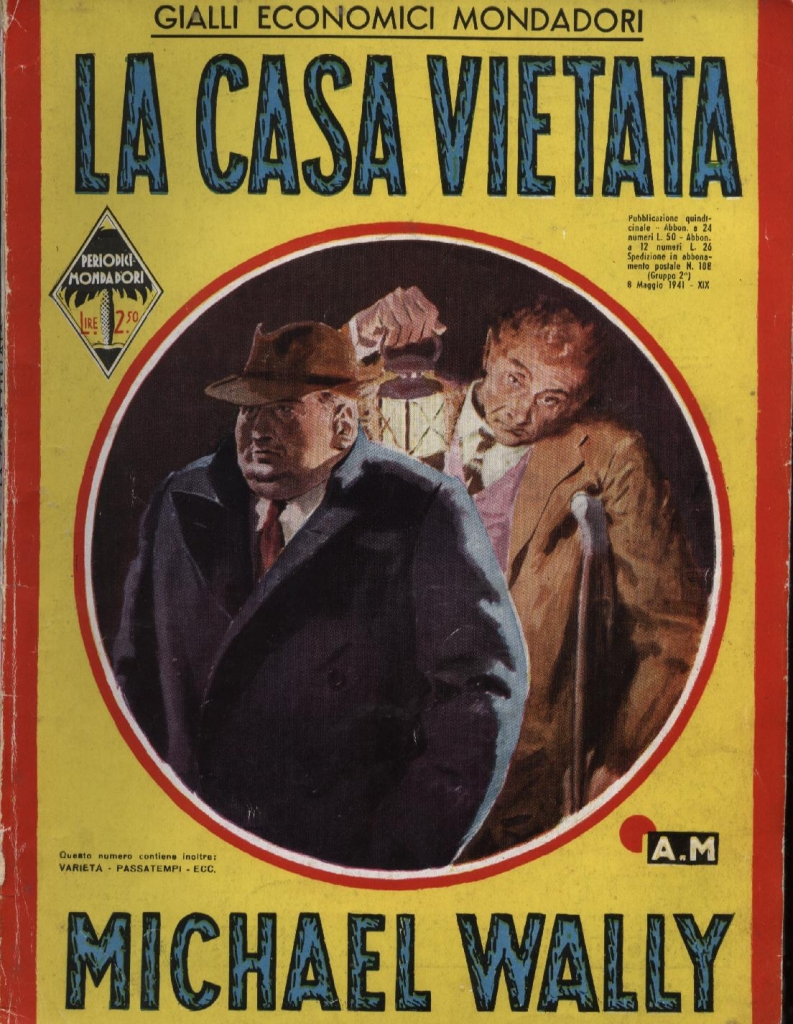
Michael Wally (Michel Herbert - Eugene Wyl) : La Casa Vietata (La Maison Interdite, 1932) - G.E.M. (Gialli Economici Mondadori) N.188, Milano -  May 8, 1941

In contrast to Boileau and Vindry, Messrs. Herbert and Wyl were not prolific, but their “La Maison Interdite (The Forbidden House)” is a minor classic.  A mysterious stranger who has been threatening the owner of an isolated mansion appears on the threshold one dark and stormy night.  The staff, hiding in fear, hear words exchanged, shots ringing out, and the door clanging shut in the face of one of the estate watchmen.  Their master is subsequently found dead but his assailant has vanished under their noses.  I selected this book because it has without question the finest court-room denouement I have ever read, but one only made possible by the French judicial system.  One of the defence witnesses is allowed by the three-judge tribunal (a characteristic of the French system) to build a case which exonerates the accused and reveals a solution which is a total surprise but an inevitable one in hindsight, all while the judges sit passively by and let him talk.  It could never happen in the UK or the US 
(John Pugmire, 
 http://mysteryfile.com/Locked_Rooms/Library.html ).

One of the best Locked Rooms I read


FRANKLIN D. ROOSEVELT - Le due vite di Giacomo Blake ( The President's Mystery Story,1935) - Il Romanzo Mensile, Milano, Anno XXXV, N.3 - May, 1937.
Plot by FRANKLIN D. ROOSEVELT


R.A.Knox - L'Assente ritorna (Still Dead, 1934) - G.E.M. 
(Gialli Economici Mondadori) N.195, Milano - August 23, 1941


Henry Holt - Il Pugnale Malese (The Mayfair Mystery, 1929) - I Romanzi della Sfinge N.20 - Salani, Firenze, 1936, pagg.134

Sunday, February 17, 2013

Anthony Abbot: About the Murder of Geraldine Foster, 1930


Among the novels Charles Fulton Oursler alias Anthony Abbot wrote, About the Murder or Geraldine Foster, is the first.
It 's the first novel that imposed the characters by Anthony Abbot, as a major novelist of the early thirties, not very prolific (a bit as Charles Daly King) but developer of plots of the highest qualità, as one of the first great novel, in which we can say  4 major subjects in all history: Thatcher Colt, the investigator, Dr. Maskell, the prime suspect (but there are at least three other suspects); Geraldine Foster the victim, X, the murderer.
This is the plot.
Betty Caldwell, December 27, complains to the police the missing from the three days of her roommate, Geraldine Foster. Geraldine is the secretary of Dr. Maskell, known internist in New York. Has anyone heard a discussion for high voice between Maskell and her, before her missing.
Thatcher Colt, Police Commissioner of New York, is interested in the story. He, at the home of Caldwell and Foster, rummaging in the drawers, founds a fragment of the letter, in which Geraldine blackmails someone for a sum of $ 4000: the handwriting is recognized by Betty. However Colt realizes that the message is written in a different ink from that used in the house. Why is that? In addition, in a jacket in the closet, is found a large key that nobody knows what to open. Later we learn that Geraldine if she needed money she would have been able to easily get from his father, the well-off condition. The boyfriend is cut short because he and Geraldine would marry, after a short fight.
Thatcher Colt goes to the doctor's house, which makes him a revelation: at Christmas Eve, a mysterious woman, with the collar turned up, went to look at his studio Geraldine Foster, then with an apology had been in the store and then had run away by taxi. The thing is fishy to Colt who then finds in a closet, fur and handbag that Gerardine Foster had in the day of her missing. The doctor denies knowing that they were there as he denies knowing more about Geraldine.
The days go by and Geraldine Foster is not. It is revealed in the meantime by the family that the girl had, a year earlier, an association with a so-called Ephraim (which turns out to be a woman in disguise) had revealed the Geraldine’s noble origins.
Meanwhile, Betty, January 3rd, calls the police and announces that she has found other fragments of the letter blackmail, in which it speaks of a house in Peddler's Road. Thatcher instructs Abbot to go, but Abbot instead of going there alone he carries the beautiful Betty of which he has been infatuated: found the place, a small two-storey (thanks to the advice of a boy who is penetrated and says to have seen a ghost of a naked woman covered in blood), they notice how it looks abandoned; moreover, on the ground, are seven pigeons dead, for quite some time, whose feathers on the front look dirty with blood.
Seized with foreboding, Abbot realizes that the door is not locked, and when he enters witnesses a terrible spectacle: there is blood everywhere, on the ground, on walls, on furniture, on curtains, a puddle on the floor, even blood in the fireplace, but the body .. no trace. He finds instead Thatcher Colt and the police. Colt is furious because Abbot was put to flirt instead of following the track: he has already found upstairs other traces of blood, also in the bathroom, in which hangs a curious scent of pine, along with dirty towels in red (blood and lipstick), found in the tub a ladies watch, stopped at 5.10 P.M..
Thatcher says he found a broken window and there near a dead pigeon, and fingerprints of a child.
An agent founds in a small clearing nearby, the newly turned earth: in the light of torches, is found Geraldine Foster, literally to pieces and mutilated. Were noticed three strange things: the body is naked, wet and on is face was put a pillowcase. The body shows no signs of decomposition. The coroner shall determine the death to 36 hours and not more than 48, even if the pigeons seem dead for the longest time.
The same agent fills a bottle with a strange liquid that has collected around the body but that is not blood; two bottles similar to one found in the doctor's office Maskell are also found. Someone said they saw a woman leave with Geraldine, the study of Maskell, in the afternoon of 24 December, carrying two bottles, of three that had been delivered, even if the doctor has denied knowing about.
The key found at the home of Foster opens the door of the house, which they will know be owned by Dr. Maskell, and then it will be assumed that he was being blackmailed. In addition, the personal effects found in his study induce the prosecutors, including the District Attorney Merle Dougherty, to accuse the doctor of murder caused by a fit: the gun found in the house, a double-bladed ax covered in blood, ill-suited to a murder premeditated. However, this is the hypothesis is working Colt, but along another track.
In fact, the doctor to the time of death has an airtight alibi but it will crumble on the basis of a direct reconstruction made ​​by Colt, when the autopsy will reveal that the girl's death took place ten days before. In addition, it is found that the mysterious liquid is tannic acid, extracted from the bark of pine trees, which has the property of delaying the decomposition.
Little by little we understand that Maskell does not want a certain woman becomes involved in the investigation and for her he'll do anything, even to risk his life. Who is she? But more it will be and you will understand: because Geraldine was stripped after death; who was the woman that was touted as an expert on family background and because she had used a false name; who had purchased the tannic acid; what had happened to the other pillowcase unpaired; who had bought those pillowcases; and finally who had the motive, the opportunity and ability to commit the murder, woman or man that he/she was. The final will be overwhelming and unexpected.
The criticism commonly tells that Abbot was a vandinian writer: what evidence would show it?
Abbot as Van Dine (or Ellery Queen) is a fictional character and at the same time a writer of fiction; Abbot as well as being a character of the story, is (as in Philo Vance Van Dine is the) the loyal assistant of Thatcher Colt, Commissioner Police; in the novel there must be an amateur detective and in this novel the investigator is just Colt whose role should not mislead: in America, the Commissioner has not operational functions that instead are purely administrative and he is the connection between the Mayor and the Chief of Police. So Thatcher Colt, being a Commissioner should not have investigative functions of fact: the fact that he has them, marks him as a person who carries out operational functions improperly: he can be treated as an amateur detective.
Finally, if Abbot was vandinian, his investigator should, as Philo Vance have encyclopedic knowledge, and the Thatcher Colt has it, in several areas: scientific and technical (he recognizes at first glance what type it is an ink, and he knows bleaching a human hair; he applies various techniques of scientific investigation: as the examination of two different types of lipstick and the examination of the substances found under the victim's fingernails; the examination of different types of hair; the application of experimental techniques to possible suspects, as the polygraph, which records blood pressure and heart rate based on the emotional state of the subject ;or the truth serum based on scopolamine, which attenuates all of one's senses except the hearing), he is a student Literature and he writes poetry.
Beyond this, the Abbot of propensity to use often in his novels, scientific wizardry is the daughter of his time and is derived from the use which had made such authors as Cleveland L. Moffett, Crofts, Freeman or Connington; in several of his novels, the victims are women, but he is not a writer of the old school, which tends to eliminate "the fairer sex" as a suspect; his novels are typical Procedurals, where investigations are not carried out by a detective, but by the police.
What is peculiar, however, to the highest degree, in this novel, is that of a single crime is based around the castle for clues and evidence: he has no need of another crime to revitalize the attention and the voltage of the reader. Abbot does not hide nor even silent certain truths, then turned out  be important: the solution agrees with all the questions in the course of the novel. Abbot, in a way anticipates Carr and Rawson, diverting the reader's attention from the right direction and turning it in the wrong direction.
It is also to say the same quality as the investigation is of a type vandinian: Colt combines quality survey acutely psychological to techniques of examination purely circumstantial, type sherlockian: so for example explains why the body of Geraldine was completely naked after the child claims to have seen a ghost in the house of a woman covered in blood and naked and after finding fibers woven into the wounds.
The novel also lends itself to another kind of criticism, social criticism:
vandinian detectives are inherently leaders dell'intelleghentia Haute Bourgeoisie, and all the stories in which they are engaged, concerning crimes that accrue only in the most exclusive of the great metropolis, as if the murder more convoluted and more complex could not reside in degraded environment and low class, but instead in a very high.
In this novel, there is a number of examples of this: the High Commissioner is responsible for a crime that involves one of the most well-known professionals in the city, whose brother and sister in law are also among the most brilliant lawyers New York hole. One would expect, therefore, that Abbot parses the most peculiar aspects of this social area. Instead, he shows great disenchantment with the daily life and expectations of small and medium bourgeoisie, dreams shattered by the Great Depression of 1929 and the illusions of social redemption through unexpected inheritance or noble origins. The size of the fiction writer, in my opinion, is better represented than anything else, from the description of a detail of the corpse: "the diamond in an engagement ring around a little finger”. At the horror of the mutilated and buried human remains, what does the ring mean ? At least two things: the wickedness of someone who has denied a dream come true to a girl; the indifference of murderer for that object.
The indifference of the ring with a diamond could mean that social extraction by the murderer or murderess was greater than that of Geraldine Foster, and it means for that a small diamond ring of the type engagement represented a little thing. For this reason, it may have been scorned and left in the bare earth. Instead, if the murderer had been at the same or lower class than the girl , perhaps the value of the diamond would have taken on his/her greed.
The novel, as we see, is a real beauty: an unforgettable novel in its dramatic force, the fine texture of the plot, in the evocative power of writing, in the versatility of the situations, in the multiplicity of false trails that lead the reader to follow of the prerequisites whereas investigative action is directed towards another.
In this way, the ending is fantastic, by rare beauty: it is expected that the murderer is X and instead is Y.

Pietro De Palma

Friday, February 15, 2013

The first birthday


A year has passed since February 15, 2012, the day when for the first time I opened this blog. 
The first article was Death of Jezebel by Christianna Brand, a novel that is particularly dear to me, as for the solution of the Locked Room, one of the most imaginative I've ever read, as because it was written by Christianna Brand, a writer who I love as much as Ngaio Marsh.
Since then a lot of authors and novels have been examined, and despite I open to all, without distinction, equal attention and introspection, the preference of readers to read specific articles instead of others, gave me the measure of the expectations of my audience of readers mainly U.S., and then Indonesian, Italian British, Russian, French, Dutch, German, Ukrainian, Canada.
Articles beds have mainly dealt first authors of area not so purely English as belonging to the Commonwealth (Brand, Marsh) authors or little known to the general public or have not been published for a long time (Abbot, Antheil, Farjeon, Connington, Aveline, Berrow, Ranpo). The norm instead of the great authors, also covered in other blogs: Carr, Queen, Derek Smith.
French authors, for example Steeman, have not been widely read as a sign of decadence (in my opinion undeserved) of French crime fiction to the general public.
Anyway I will try to expand the offer, presenting other authors yet. 

The near future will be reserved for another novel by Abbot. 
I thank all those who follow me and preferentially friends and acquaintances: 
John Norris, Sergio Angelini, Curtis Evans, Mauro Boncompagni. 

Pietro De Palma

Saturday, February 9, 2013

The homage of Edward D. Hoch to Mary Shelley and Agatha Christie


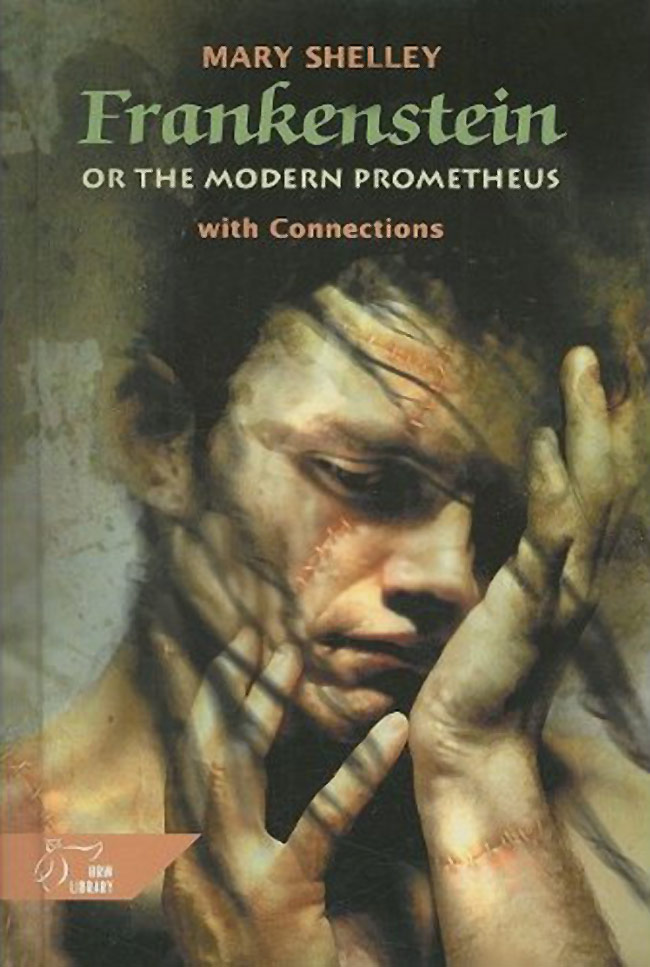
Edward Dentiger Hoch : The Frankenstein Factory, 1975


Edward Dentiger Hoch (writer well versed in classic whodunit, who wrote nearly a thousand stories, including many Locked Rooms), who had previously written four other novels, two mystery (The Shattered Raven, 1969, The Blue Movie Murders, 1972 with the name of Ellery Queen) and two science fiction disguised (The Transvection Machine, 1971; The Fellowship of the Hand, 1972), wrote The Frankenstein Factory, 1975, which would seem to derive directly from Mary Shelley's masterpiece, Frankenstein.
The novel tells about an island where capsules of hibernation are stored, where many people have ordered that their bodies are kept waiting for breakthroughs in medicine make it possible to treat with surgical techniques and drugs still unknown. Dr. Frankenstein of the situation, here called Lawrence Hobbes, tries an unprecedented surgical intervention: in a man’s body about thirty, died of a brain tumor), he will try to implant the brain, heart, the kidneys and liver of other human beings. The operation is somewhat secret, because the scientist "use" some bodies just to pick up bodies, bodies thus unusable or almost .
The novel is in some ways quite similar to one of Steeman which has also been discussed in this blog space: there is also a doctor who tries a never attempted thing before, that to revive a body  no longer alive through electricity , after having inserted into the skull another brain. In both cases, surgical intervention is on a criminal: criminal for love, at novel by Hoch (before he killed himself jumping under a train, he had killed his wife, who had cancer) but in this case the brain of a murderer is placed in a body of a boy who died of a brain tumor; at Steeman’s novel, the killer is criminal rather pure state: into him, the brain of a normal person should be transplanted into the skull of a murderer.

Both have obvious points of contact with Shelley's novel, but even more Hoch inserts a quote that clears any doubt, in the second chapter of his novel : he refers to the Factory of Frankenstein, as does Dr. Armstrong to tell he and his colleagues are the equivalent of Dr. Frankenstein, because as was Dr. Frankenstein in Mary Shelley's novel, he and his colleagues would put the brain and organ in the body and would create a new individual.
If it’s a detective story, there must be a detective. And in fact a detective there is: Earl Jazine, the same detective at "The Transvection Machine" and at "The Fellowship of the Hand." It is an agent by Computer Investigation Bureau, a secret section that reports directly to the President of the United States.
What is Earl doing here? He works undercover: he apparently is a video engineer in charge to take back the audio and video phase of a revolutionary to be held in secret island, but in fact he should investigate cryogenics research and its funding, not all under the light of the sun . Exits coverage when Vera Morgan, a chemical researcher, reveals the true identity of Earl. And this happens when disappears Emily Watson, a philanthropist who lives in the center and that subsidizes with his money and when is killed Dr. MacKenzie, one of the surgeons of the team, strangled. Also disappears "the Creature", and then it is expected he is the murderer. Then are killed all except Vera Morgan, Dr. Armstrong and Earl: Tony Cooper (lover of Vera), Freddy O'Connor, Lawrence Hobbes, Philip Whalen, Emily Watson.
There is a battle in the halls of the capsules between Earl and the Creature (called Freddy from them), and then again there is an ambush on the beach: the surgical intervention failed  and so the brain had a trauma. The creature does not speak, has his left arm is not working but the other, as a whole being, has superhuman strength. Yet succumb opposed to the three survivors: Jazine, Armstrong and Vera.
Was he who killed the scientists? Or he has nothing to do, and the choice is between Armstrong and Morgan? Jazine will select and will provide the solution, after drinking a cup of coffee, which could be poisoned if his trainer was indeed the murderer.
The fact that the location chosen for the operation and then .. for the murders in the novel is an island, and that several people agreed there for the completion of surgery all die, calls to mind the novel by Agatha Christie , And Then There Were None: an island turned into a trap. A similarity blatant, so brazen, you have here the person believed dead, who she is not; and what's more, a character present among those of the christian novel, which is also present here among scientists on the island. There is also a person with a double identity, and a voltage not indifferent, that Hoch established with wisdom, misrepresenting readers with red herrings: the first, that of the missing person, and the second, that of the Creature, and the third, that of the true murderer.
 
"This situation reminded me of a novel by British writer Agatha Christie, a work of seventy years ago. He spoke of ten people who have to stay on an island are killed one by one, just like here ... In the end it turns out that one of the alleged victims is still alive "(Edward D. Hoch, chapter 14).
Needless to say, the culprit here, as in Christie's novel, is one of these, but if in the original work of Christie was one previously considered dead, here he is not so: the novel by Hoch has an identity and a change, interesting. There is who is supposed to be dead by virtue of blood found in his bed but she is not, but that really she dies, then.
Even in the solution Agatha Christie enters by force, because it learns that the killer was inspired by her novel. However, the similarities end there: in fact, the ending is not cathartic, do not die all at the deserted island; and while at Christie’s novel we ask: "Who is the murderer?" tick here one of those who was thought to be dead, who was not dead and had killed the other.
No.
The ending of the novel Hoch, is reminiscent of the final of René Clair's "Ten Little Indians": two of the defendants (but one is here the investigator) are able to escape and take out the murderer.

Pietro De Palma

Saturday, January 26, 2013

A very nice novel by Roger L. Simon

Roger L. Simon : Wild Turkey, 1974

Roger L. Simon, born in 1943, wrote several novels about Moses Wine jew detective, already the main character of The Big Fix (1973), winner of a novel CWA New Blood Dagger.
Wild Turkey, was written the following year, going back to 1974. Like all writers of a certain weight, Roger L. Simon, alternate activities novelist than as a writer of screenplays: years ago, for the screenplay of the film Enemies, co-written with the director Robert Mazursky, he was nominated for an Oscar.
The novel begins with Moses, detective started, but at the moment without investigation, pledged to take care of his sons, Jacob and Simon. While he is still asleep one morning, comes a wacky journalist, that Gunther Thomas, who wants to interview him at all costs: he makes so much noise, than Simon wakes in the bed, and starts crying. The fact is, Gunther, who hasn’t with him a photographer, promises to return in a few minutes with a friend of his, except that he takes 13 months.
When Gunther returns, Moses is temporarily out of work, and he must work full time for his children, as the ex-wife is on the road: in particular he must deal with Simon, the youngest of his sons, who does not do shit alone: so, Moses must also deal with cleaning the child.
Original start of a novel. This already introduces a note of all of its own.
Gunther arrives, along with a photographer as he was weird, and in the meantime, Moses undertook to clean the poop of Simon, who has made her in the diaper. Gunther asked Moses to accept a position on behalf of Random House and the RCA: Moses must find the evidence to fulfill the successful writer and screenwriter of a film about the Mafia, Joch Hecht, the accusation of being responsible for the death of Deborah Franck, successful journalist.
When Moses went to see Hecht the first time, he is committed to take material for a book about the sexual revolution, by his intercourse with two pretty girls, of course, covered only by a towel. Hecht who "worked hard" with the two girls is exhausted.
Deborah Frank was found murdered in her apartment, and since Hecht had a controversy, also quite violent, with her in the newspapers, the number one among suspects is Hecht. He seems to have spent the night having sex with Meiko, a chick who fights naked, with naked men, at the Kama Sutra Sexual Club
Meiko seems gone. Obviously, the inveterate reader has already realized that Meiko was killed. Wine, however, that the old story has understood (I think) goes to the Kama Sutra and after various vicissitudes, in fact he understands the madam is reluctant to talk.
Furthermore, what is the tears that Meiko, does not exist: Hecht calls all the girls he has sex, “Meiko”. The alibi crumbles, it does not exist.
 Moses goes to see Hecht, and found him dead, sitting on the toilet, with a hole in his temple and the blood dripping, drop by drop on the floor. In the typewriter is added the classic ticket suicide. But Hecht's wife, Nancy, who rings the doorbell of the house of Hecht, when he, Moses still does not know what it needs doing, she does not accept the suicide of her husband. Much more than from a file, they seem to have disappeared some papers.
At this point, begins the real investigation, which becomes more and more messed up. From Kama Sutra Sexual Club, you go first to the Jewish Mafia, then the Cuban: indeed, if a jew boss, accused Hecht, of having taken away information, which was then passed to the police, so as to incriminate him, then he comes to understand that behind the Kama Sutra Sexual Club there is a "League for sexual liberation" (those of 1974 are the years of Deep Throat by Gerard Damiano, and customs clearance of Porno Chic, proclamations in defense of freedom of expression and against censorship). And after the league it is the Cuban Mafia. The boss, Santiago Martin, wants the tapes. What tapes? Those who seek all. So Moses realizes that behind the Meiko and Hecht deaths, there are these tapes: now Cubans directly threaten him but especially his children and so Moses sends them with her aunt at Disneyland, where policemen there are several .
At this point,
it's a total, total mess: two dead sure (Debora and Joch) and another probable (Meiko), the Jewish Mafia, the Cuban mafia, tapes disappeared, and a league for sexual liberation, which always checks below: Cubans, and then other people want them by Moses, because he found Joch, and they think he took the tapes. But why these tapes are so important? We do not know. At some point, one would think that even in the general casino, the CIA makes his entrance, when you hear to talk about the Bay of Pigs Invasion in Cuba.
The CIA man, "El Jefe" you are then you know to be the nickname of the General Attorney of the State of California, Frank Dichter, who in those days sparked a real war against the League, brothels and cinemas in XXX -Movies. At this point, Moses, has on his book of suspects: the Jewish Mafia; the Cuban Mafia, which controls the area of ​​sex; an Attorney General who has had dealings in the past with gangsters and now he wants to make out them; and at the same time , there are also some henchmen to his ribs (one end buried by an avalanche of mud, water during a storm, while Nancy and Moses fled from the center of Cindy completely naked, trying to outrun the storm: they will end up in a shack, eating pork and beans and making love not only to keep warm). Oh yeah, I had not said: starts a love story between Moses and the beautiful widow.
I will not say how the novel ends, but only that: the murderer of Deborah, is not the Joch’s murderer ,the Joch’s murderer is not the Meiko’s murderer; and like at the final fireworks, they kill all or most of them, as in a film by Quentin Tarantino, and the tapes are found.
And you can also understand because the novel is called "Wild Turkey". In fact, in this stunning novel (cost me fifty cents on a stand), in which nothing is as it seems, and where everything has a hidden meaning, “Wild Turkey” also has a double even triple meanings.
In fact, the meaning does not refer only to the bird, as well as a famous Bourbon Whisky, guzzling Moses is that Gunther. But “Wild Turkey” also refers to Nancy, because like a wild turkey, she dies killed.
I believe that the title refers to her
And for people like me who chews a lot of stuff, Roger L. Simon can be seen that, to the core, absorbed the novels of the great writers of Hard-Boiled. In addition, the atmosphere is great, although a lot of strange and original, but then everything is in its place, like a giant puzzle. And the woman he loved dies.
The poor Moses, reminds me a lot, but in another context, the Arkady Renko by Martin Cruz Smith (who only had one wife and children to look after).
It’s a crime novel remarkable, with a steady pace and substantial current, and atmospheres film features (there is also the parenthesis in the studios, where he has found one of the bodies in a ventilation duct); describes in a very vivid and effective manner
, a lot of situations of those years. Nevertheless with  a its criminal background absolutely visionary who would have been, in that context, utterly believable.
Very nice novel.

Pietro De Palma

Sunday, January 20, 2013

Patrick Quentin : The Jack of Diamonds, 1936


The beginning of a successful collaboration


Patrick Quentin, as Ellery Queen and others, was not only a pseudonym, but also a firm. In fact it was the combination of 4 pairs of writers, who signed differently:
the most prolific was formed by Richard Wilson Webb (1901 - 1966) and Hugh Callingham Wheeler (1912 - 1987), since he signed several novels under the symbol Quentin Patrick, most with Patrick Quentin, and all with Jonathan Stagge. In practice, the beginning of this highly successful collaboration on the 1936, when Webb, who, signing Quentin Patrick, had written two novels, first with Martha Mott Kelley (1906-2005), then, when she was married, he had written one alone and two other with Mary Louise Aswell White (1902 - 1984), he found Wheeler, an old friend. It must be said that both Webb and Wheeler, were British by birth, but then, later on, emigrating both in the United States, they had become citizens.
The Jack of Diamonds, 1936, belongs to the couple formed by Webb and Wheeler. Like the novels of the series Peter Duluth, psychological elements are mixed with elements typical of English mystery, in an extremely characteristic.
The plot is which seem remarkable.
Katherine La Motte, soprano; Sir Henry Bentley; Libby Hunt Farley, bridge player of the beau monde; John Derwood Thring III, grandson of the founder of the Tract and Treatise publishing house; Judge Homer Rock; Baroness Lili Tresckow, of  eponymous fashion house, are invited by Theodore Frensham Vanderloon, to an unusual reception, whose purpose is "To kill Mr. Joseph Starner."
It isn’t a board game such as the famous Cluedo, even if the reason is that: in the course of an evening dies a guest. But unlike the Cluedo, the aim is not to identify the murderer, as .. to locate and to kill the victim. Yeah, that's right. But why?
Who has made deliver the invitations, you can not tell he is familiar with his guests, but, like them, unfortunately he knows very well Starner, which is a vulgar blackmailer: Starner blackmails all seven persons for different reasons, but in the same way he has stolen them and he continues to steal them.
What better occasion of a reception, which will be asked the same Starner, to kill him, after having conveyed the wishes of all seven blackmailed? Moreover, all seven, being united by the same understanding will protect each other, providing all the same story.
The thought is great: the opportunity will be to skate on the ice, near a lake, close to the residence of Vanderloon, except that some of the ice will be broken, so that falling there, there will be no escape. Obviously it’s need to be Starner to fall: the ice was broken near a pole, which it has to serve to the killer to cling and at the same time to give a boost to the victim, condemning him to certain death. To avoid that Starner can notice the trap, the only lanterns that give light to the whole, have been obscured near the trap: in this way none of the seven conspirators knows who has ever been to kill Starner
. In addition, the snowstorm provided by meteorological service, "to determine" the suspension of telephone communications, and means to reach the city providentially there will not be, because Vanderloon will have done so to review the car at that time.
Starner arrives, but .. not only that he is accompanied by the beautiful Carmelite, his adopted daughter. And this a hitch: no one thought that there could be a witness. However, soon the situation evolves: Carmelite begins to flirt with the baronet and the atmosphere is relaxing because Starner doesn’t notice anything and he is relaxed.
But the unexpected happens. The only person by group that has not had the slightest acquiescence in the conspiracy, was the judge Rock: he has the unfortunate idea to confess it just Starner, but Libby Farley Hunt realizes it and she says it to the other : now the situation has changed, and the game can end badly. The seven do not know what to do, are undecided, but then “the dances begin” and the seven throw themselves on the ice to skate: they are surprised, however, by snow, and the lanterns, the ones that had to ensure sufficient light, turn off: now hazardous conditions, be extended to all. However, there is the pole like a lighthouse warns of the presence nearby of the trap. Only skating, participate in, Carmelite: a concern anymore. If she fell?
At some point, however, someone actually falls. Starner died. Everyone is happy.
Men go to retrieve the body, while the women wait in the heat and darkness.
A shadow observes and talks to the right place: the terror and fear is painted on their faces: Starner is alive. So, who died?
The victim turns out to be just the judge.
Starner discovered the plot and how the attempt to eliminate him resulted in the death of judge. Both he and his victims are aware of the rest: if before the weight of blackmail was unsustainable, how it now will be that all can be blackmailed for a crime that they warp and  caused the death of an innocent? More, the victims realize that even if they could kill Starner, the presence of Carmelite may cause only a change of cashier in the logic of blackmail: she is really nice but a poor orphan subtracted from the orphanage, or she is a cunning blackmailer?
Sir Bentley assures onlookers that he will take care of her: he will marry her (if one is in love, it seems reciprocated) and then he will close the mouth of his wife, at the occasion. Here then it reappears the occasion: try to kill again Starner, with the Starner gun that the butler of Vandernoon, Bowles, philosopher and friend of the owner of the house, stole from the host suitcase.
A tray with the gun will be left on the piano in a room where the lighting will be provided only by candles: candles blown out, no one can pick out those who will subtract from the silver tray, the gun. However, the choice of the murderer, will be assisted by Fate: 52 cards will be distributed to those present and who will find it "The Jack of Diamonds", will be the hit man chosen by fate.
Only things do not go quite all the right way. Starner will be killed, but .. by whom, if the same Starner took possession of the gun?
The gun will be found next to the head, and a wound above his right ear at close range testify to the police a suicide attempt. But really Starner attempted his suicide or he was killed? Why on his shirt will be found a burning candle, as if the candlestick on the table, dropping him, it had spilled over, despite the fact that everyone knew that the candlestick was not on the table but on the fireplace? And how do you explain two shots instead of one?
The Vandernoon butler, Bowles, will have the last word and he will rebuild the actual course of events.
The work brings together two genres, combining cleverly: the Thriller and Mystery. The moment guests Vandernoon exposes his intention, that it should be common, which is it to "get rid" Starner, starts off a very special process: the Thriller is expressed in "consecutio temporum" of the crime that is being preparing. Starner will die? The authors (and the skill is in this) knew that in the case in which the victim would have been suppressed, the tension would be exhausted. And then sensed that only by creating obstacles, from time to time, they would create suggestions and  expectations are always different: the first is the arrival of a person does not hold, Carmelite; the second is given by the judge, that being faithful to his oath moral ( a man of old-fashioned justice) he can not commit a reprehensible act ; the third is given by the revelation of the plan to Starner and how he will react; the fourth:  the victim is not Starner; the fifth by the change of plan murderer; the sixth from double blow gun; the seventh from the possible intuition of another character who, alarmed by the disappearance of Starner, should alert the police.
Here and there, the voltage has points of maximum explosion, when the expectation that everything goes in a certain way, is called into question and the atmosphere at the same time makes her: for example, when women are placed in an enclosed space, in a room, in the dark or in the shadows, waiting for the corpse of Starner, and in that space where there they should be only, they hear the voice of evil and unexpected Starner: So .. as if someone had played a gong close. A terrible effect.
The Mystery instead begins where the crime was committed, and despite assume who the executioner is, the surprises will be many.
Despite a certain naivety of the fund, which corrupts the plot, namely the fact that two people who have been known for a few minutes, already decide to get married, which can happen only in a dream, the unusual shape of the investigator will undoubtedly refer to Reginald Jeeves (Bertram Wilberforce Wooster's valet) of Pelham Grenville Wodehouse.
Not only.
The same situation of the conspirators who try to kill their blackmailer and they will agree in advance that will cover each other, if they were to be questioned by the police, is very reminiscent, in fact, for me it's a shameless quote of Murder on the Orient Express by Agatha Christie, especially when the conspirators, as potential murderers, become .. avengers. Even if, as appropriate, the facts are constantly being reversed, so it is hard to recognize a common matrix.
What I think, however, testifies to the genius of the plot? A small insignificant detail: the burning caused by the candle stuck in the chandelier, which masks other burn. No one thinks that a particular kind may be important. But it is not.
And so no one notices how a chandelier that comes cited as resting on the mantelpiece, then it is found as falling off a table. Why it will have been moved?
Here is the touch of genius.
The hypotheses put forward about the literary references of which I believe to have been built this short novel, I think are sufficiently valid, based on the fact that the two, Webb and Wheeler were before becoming American citizens, British citizens. In addition, Webb is known, was "very well read" not only in the detective genre
One last thing.
Some, such as Pirani, author of an important Bibliographical Dictionary of Crime Fiction in Italy, say that the first story signed by Q. Patrick/P.Quentin would be Killed by Time, which appeared in 1935, one year before the story.
Others say that the first story would be just The Jack of Diamonds.
Mauro Boncompagni told me long ago that he had learned, from an american friend of his, about a letter written by Webb to Dannay (one of the two Queen) in which he talks about his first novel, appeared in 1933 on "Liberty", an American magazine, unfortunately without specifying the name (perhaps because Dannay already knew it).
However, it is evident that in the case of Killed by Time if not in the case of the other of 1933, one should speak of stories written before the two should meet again. So, stories belonging to the period in which, more or less, Webb worked with Mary Louise White Aswell, with whom, precisely in 1935, began publishing the second fruit of their collaboration, The Grindle Nightmare,1935
(also Darker grows the Valley).
One gets that right The Jack of Diamonds could be the first result of the collaboration Webb-Wheeler, perhaps.

Pietro De Palma