Sunday, May 29, 2016

Charles Daly King : The Episode of the Vanishing Harp, 1935 (from "The Curious Mr Tarrant")


Tarrant, who is a special investigator, who remembers very much  Philo Vance (not surprisingly Daly King is a vandinian writer of the the first hour), and in fact is into archeology, psychoanalysis (coincidentally the same as Daly King who was an accomplished scholar ), painting, physics, and other intellectual pleasures, and living annuity, lends his services for free to those who can tickle the curiosity of those enigmas by sending it so abstruse and so crazy no one could solve. Provided, however, that he, the investigator, is free to do whatever he wants to get to the solution. Moreover, the fact of not being paid is a “conditio sine qua non” that Tarrant is considered free from any contract and from any taxation. Works according to its own methods, which are not those of the police, whom he can not stand, despite often ends to facilitate with his collaborations (Philo Vance also criticizes police methods: eg. In The Benson Murder Case).
Here the narrator, who speaks in the first person and presents Tarrant in the third, remaining in the shadows (as in the novels by Van Dine, looks a bit '...) introduces Daben Donatelli, his biggest partner of two years of college, fabulously wealthy, and married to Molla, a beautiful and rich woman, Irish descent. Daben possesses an ancient harp, quite similar to Egyptian harps "nanga", whose history dates almost legendary and which is linked to the vicissitudes of the clan of which he is a descendant Daben. At which point someone in the twelfth century had thrown down a prophecy linked to the fate of the harp, whereby again, when the wedding that was held at the time between an ancestor of Darben and his bride will be repeated, and the 'harp had disappeared and then appear and disappear again, the house of Daben being extinguished forever.
Now the salient fact is that the harp has disappeared. By a reinforced concrete bunker, where there is the home library, built inside the villa where Daben and his wife (descendant of the ancestor's wife Daben) live, which is accessed by means of a secret panel , the location of which the opening mechanism is known only to Darben same, and in which there are no windows, but only present a system for air conditioning, whose openings are such that it could not pass even a mouse.
Tarrant agrees to come to the villa of Daben, but when it comes, no time to become aware of the places, and ... the harp is found, in the joy of everyone, including the landlord. At his villa not only he and his wife stay, but the Secretary Stuart (when there is a rich man or a rich woman, there is always the secretary) too; Brinkerstall, a financier guardian of Daben wife; Dr. Turpington and his wife; and the service staff. By pure chance, while going to come down to dinner, Tarrant picks up on his plan a conversation between Molla and Stuart, and he  understands between the two there is an affair.
The presence of Turpington and his wife is legitimized by the fact that Molla is prone to nervous breakdowns: the harp disappearance connected with the curse expressed by the prophecy, for her , very attached to family traditions, has become another form of psychological frustration and emotional, and for this Turpington, who is a family friend, invited her to accompany him and his wife on a cruise, to "disconnect" from the atmosphere that she lives in that house.
Beyond that ... anything that would explain the reappearance of the harp, unexplained, as such as had been the disappearance. Who would be able to make disappear a harp, that is a massive object,  by wood, similar to a kind of zither, but by the shape of a drop, from an impenetrable room?
Tarrant comes in the room together Daben and examines it thoroughly, but does not find anything: only books, and models of boats, in the frame at the top, above the shelves of the library. He examines the walls, the carpet looks, examines the shelves, but can not find anything.
Meanwhile, life goes on in the villa including dinners and games of bridge. But one evening while there was a bridge play and Tarrant saw the panel in front of him open and close and then open and close when Daben had passed bringing under the arms a boat model that needs fixing, at the climax, when Molla wants to see once again the harp in its place ... the harp is gone. Needless to look everywhere and re-examine the shelves and everything else: the harp appears. Tarrant even come to see if there are fingerprints on the glass case which should contain it, not finding any.
After a trip to New York, and after being barricaded himself one night in the library, fearing that someone would attempt to his life, the impossible happens: after midnight Tarrant faints and who enters silently ascertains that Tarrant is dead. But when Daben comes in the morning realizing Tarrant is lifeless, he runs over to call the doctor; but when they return precipitously,  they find Tarrant alive and well holding a gun: he requires two men collect the present, and their presence identifies the culprit, reveals how the harp has disappeared and reappeared, and finally gives a name to culprit way, giving him as an alternative to arrest, the suicide by poison.
Remarkable story, makes an immediate impression for the narrative structure that is not "story by" classical: when we think about a short story of 30s, we think about something that inevitably must give up a introduction,  a detailed description of the characters and their aversions which would introduce a crime, but it must introduce immediately, without extensive preambles, to the crime. Well, that's in the Tarrant story there is, because it is a miniature novel has an introduction in which the narrator (we said at first) introduces the principal character, Mr. Tarrant, describing him:  describes the one who does the investigator, his milieu and practical reason for which he it does, that the harp; It describes the harp and the historical moment to which it refers, which in turn must then justify the prophecy upon which the curse; Finally passes to description of the characters and the places where the action takes place, and the action itself.
The action assimilates the story to the genre of Locked Room. But is not the Locked Room that we find in most of the production, that is, where in a locked room or in a designated area (American purists oppose this second chance talking about the Impossible Crime: snow, sand, dust, island in the sea open) it occurs a crime, but it is only the disappearance of something that is technically impossible that disappears (and reappears in this case to disappear again) from a closed space without someone noticing. Carr resorted in the last works with Merrivale (The Cavalier's Cup, for example.) And in some stories or radio plays: eg. one in which a person is stabbed to death in a pool, using a dagger that vanishes, like invisible seems that it was the murderer (The Dragon in the Pool, 1944). Other authors have examined this possibility too: eg. the impossible disappearance of a sword, at The Bishop's Sword by Norman Berrow. In some ways, the disappearance of the harp, the resurgence and the new disappearance, are very similar to the dagger that has missed from a room without a trace: it is clear that it is not out, to be there. But where? The King’s skill is there, rather than in discovering of the culprit that is simpler. Moreover, there is a recognizable figure that likens the story to his own creator: the motive is to be found in a distorted personality, whose affection is explained as a psychiatric condition. In this figure, we find further closeness of the copy as its archetype, which is Van Dine: beyond the obvious characterization of private investigator who knows everything (Mr Tarrant is very close to Philo Vance), and the presence of the narrator friend who narrates in first person but always remains in the shadows, further evidence that Daly King was a vandinian writer, in this story, is given by the killer's personality (because they did not hesitate to kill Tarrant) of which the investigator finds a clue by reading a book, just like at The Greene Murder Case: there reading Handbuch für Untersuchungsrichter Gross, here Emotions of Normal People, by A.M. Marston.
And as in that case Philo Vance gives the killer a chance to kill himself, as Tarrant here gives the killer the chance to kill himself by poison .


P. De Palma

Wednesday, May 11, 2016

Charles Ashton: Dance for a Dead Uncle, 1948


Charles Ashton, is not a well known author, indeed.
Even on Gadetection, the best known specialist site in the world, the biographical information about him are void. About Classic Crime Fiction instead it found only that "Charles Ashton, born 1884, had one main series character, Jack Atherley. Other than this we know little else"; he wrote  ten novels : Murder in Make-Up, 1934; Tragedy After Sea, 1935; Death Greets to Guest, 1936; Calamity Comes to Flenton, 1936; Stonde Dead, 1939; Death for Two, 1940; Here's Murder Done, 1943; Fate Strikes Twice, 1944; Murder at Peveril Melton, 1946; Dance for a Dead Uncle 1948.

From other references we know he died in 1968.
But who was he? When I wrote this article, I had found little notes about Ashton trusting in the biographical informations by Gadetection. I would have to look for informations. Came through for me, John Norris, a friend of mine, blogger (Pretty Sinister Books), who found these other informations: "
British actor Charles Ashton became an actor not long after receiving a medical discharge from the army due to injuries he received at the Battle of Ypres in World War I. He made his film debut in Pillars of Society (1920). He appeared in a string of films for such well-known directors as Maurice Elvey and Victor Saville. Ashton was one of the many silent-era actors whose career ended with the advent of sound, and he made his last film in 1929. However, he did begin another career as a successful novelist in the 1930s and 1940s, mostly of crime thrillers.  
The novel I want to discuss is the last of his production: Dance for a Dead Uncle.

Rare book in the original version in English, rare in the Italian edition of the book (a year later) in the series of "Big Yellow" Pagotto (in Italy the term Yellow, is used to indicate a detective story. It comes from the predominant color on the covers of the first detective novels of the publishing house Mondadori, in Italy).

John Ormesley died.  By natural death.
Some time before his death he had become interested in seances, for the interest of his friend, Major Repford. But these his interests had been disapproved by his nephews, especially the two brothers Philip and Harold who took care of the family, and that were the children of a brother of the old man; the other three young nephews (children of a sister) Francis, Desmond and Stanley, however, did not in any way criticized the  spiritualistic interests of the old uncle.
In his will, at least bizarre, the old states that the two greatest nephews in turn should watch his coffin in the dark, lit only from four candles at the four sides of it, in a completely locked room: and motivates this with, with the fact that his spirit wants to look at the two incredulous nephews.  Indeed uncle invites others nephews and their wifes to dance to the sound of music at his funeral, because he thinks that his life will be happy afterlife. He also wants that no one dresses in mourning but as if they were going to pay him a visit. The purpose by dead uncle is clear: playing a dirty trick to the two nephews, and having fun behind them ... by dead.
This will read from Hallerton, counsel for the old, in front of everyone, suggests Philip and Harold, that if they refused, they could be excluded from a lot of generous bequests uncle. In fact, even the will of his uncle is a joke made by his uncle to his nephews, because even if they refused they would not be excluded by the legacy. The content of these last will cause criticism from some who refuse to dance and to dress brightly, Clara, Harold's wife, and Philip, the eldest brother. Nevertheless, if Clara retires to pray once arrived at The Grange, the estate of Ormesley, others decide to fulfill the will of the dead, especially the two larger cousins: Before Philip (at 22 o’clock), then his brother (at five minutes past 22) will have to be alone with the dead, in the dark, in the study, while others will have to meet in the library to testify that Philip and Harold are actually entered in turn in the study.

Meanwhile, Stanley and Cicely, Philip's wife, go for a walk in the garden and here are surprised by a maid, while they are kissing (they have an affair), without them noticing, while all the others are inside the house. Major Repford arrives, friend of the old man, who has routed him to the spiritualist practices. Immediately he understands that his visit is not welcome because impute to him the spiritualist passions of his uncle and then what ensued.
At one point they hear drop three lines , which seem to Durblin the old butler, those that old Ormesley used to do with a stick to get his attention. Nobody knows comprehend who has made them and where they come from. Cicely came back but Stanley goes to see what happened to Harold. Seeing neither Harold nor Stanley, sent to look for Francis.

Harold goes to get drunk in a bathroom on the first floor while his brother Philip entered the studio to 22.00. After a few minutes, feel again the three shots coming this time from inside the room followed by a horrible groan, which makes their hair stand at all. The 5 minutes finish and Philip does not come out. Meanwhile Francis arrives saying that he did not find Harold, and, knowing the news, and that others had tried to open the door but in vain, proposes to go around and try to get from the windows: he, Hallerton and Desmond go around and find the doors of the window s, closed. Desmond breaks the glass with an elbow and then penetrate into the room lit by four candles at the corners of the catafalque. Leaning against one of the trestles is sitting Philip, with a crown of flowers on his head and a photograph of the old Ormesley placed on the chest. He is dead: he has been killed by a spear in the back, and the weapon is located on the ground instead of in a panoply on the wall, with blood dripping the blade. On the ground, a handkerchief by John Ormesley.

Philip has been assassinated in a hermetically sealed room.
Meanwhile he arrives staggering Harold: he says he had gone to Clara, and wants to enter the room to avoid being ousted by the legacy: they prevent him and put him aware of the situation.
Call the police and get the Inspector Lessington of the County Police, which is at dire straits: it’s evident all those who are in the house will inherit, and that no one could have something to do with the crime because if Clara was in the room and Harold too drunk to walk, Stanley was in the house upstairs to try and Harold, and Francis to seek the two of them, and the other in the library, who would ever have been able to kill Philip, discovered dead in a locked room, sealed inside and whose window had been closed?

However some bad testimonies are intertwined: Harold says he was with Clara and she instead says that she was alone, then when it becomes known that he would rather go to get drunk in a bathroom, where the service staff found a bottle of empty whiskey; if the testimony of Stanley is intertwined with the testimony of Clara, he does not know how to explain his delay. And besides Francis also it delayed, but in fact they then found on the ground his cigarette case. In short Lessington does not know what to do, and therefore they alert Scotland Yard, which sends the Inspector of C.I.D. Merton.
Merton just arrived begins to question everyone, without exception: even Durblin, the butler, Major Repford and the medium that had participated in the meetings of Ormesley.


He learns all sorts of things especially about Philip, who was not loved: his wife who was unfaithful could not endure his pedantry; his brother had had disagreements; Francis kept in check who was tired of working in the company of his family (but in the meantime he had not gone away); other cousins didn’t tolerate him; and even the butler feared him for something that happened in the past, when it was discovered he had stolen some change of the old Ormesley, but had forgiven from him (while Philip, to which it had been ordered not to interfere, didn’t forgive him). Then in the workplace he was hated for how he had  treated people in subjection to him, including Francis, when the banknotes were gone from his desk drawer, treating them as thieves, except to find them in the cavity behind the tray.

However, nothing seems to move. Merton begins to think of a case, related to a room behind the fireplace which houses of fishing tools. Then Stanley and Buckley, the medium, go away. When you think they have something to do with something, they fall and make themselves available to the inspector. It turns out that on the night of murder, Buckley had gone to the house of Major and then he had gone to The Grange (to find him), where he had arrived and had been seen heading towards the house, only to later go away ; Stanley, questioned by Merton separately, when you think he has to do with death, rather provides another explanation: the second three sticks and lament had been produced from himself, upstairs, in the room of the old uncle, beating on the floor with the victim's shoes that were found by the old Durblin thrown under a chair instead of answers as he had done neatly. Merton finds out that into the room at which had been put the coffin, they  had put a lot of wreaths in a part of the study room in the dark, where there was an armchair: when they entered the room, they had not paid attention to all these flowers.

Merton processes a first hypothesis that the murderer was inside the room when they had entered, concealed under the flowers, and then when they had come to call the police, he managed to slip away through the open window. But this is a first hypothesis invented to mislead the killer.

Hours later, in the presence of all those present, it will formulate a second hypothesis that will retract the first, nailing the wily murderer, disoriented by a theory, first formulated for the specific purpose of deceiving him.
Beautiful novel, you  read it in one breath. It stands alone on hallucinatory atmosphere, which presupposes supernatural intervention, because only it could explain the death of a person struck by a spear in the back, inside a sealed room, where there was only a coffin, with stone dead on the inside. How not to think about the revenge of a dead man, arrived from the afterlife? Given that the first thing you would have to look at is that there really the dead uncle was in the coffin, and no one looks at there trusting that there is really the dead uncle (and he is there!), end given that anyone feeling that Philip does not respond, feels the need that all should feel, that is, breaking the door, question that arises the good Merton (and the reader, also), even here the sequence of events, even if the murderer is one, is explained and explainable only by recognizing that there is a combination of two actions but each in itself: the murder and the production of the first false three noises; the production of the latter three false hits and lament. Stanley and the murderer are not accomplices, but have acted both to the detriment of Philip: the first , wanting to do it scare, because he can not stand him; the second to legitimize a supernatural event, which will then also be charged for the murder to. The beauty is that the murderer, when he hears the noises caused by another person, it scares in turn.

So here too there is a sham.
The solution is highly spectacular: it reminded me, in a certain way, to Whistle Up The Devil Derek Smith, for the role of the window and the role of one of those present, who should oversee something: there is the window in the corridor between the observation point and the closed room from inside, but here it is used to access directly to the room; there is someone who would have to monitor the situation though apparently would not have to go straight into the assassination; Here is someone who had to watch that Philip would have remained in the room, and instead is entered directly into the assassination dynamic.
As it has developed the murder, since there are no other outlets besides door and window, if the first was watched by more people and it was closed, there is no doubt that the murderess has entered and exited from the window: it is obvious! But how did he do? The trick is extraordinary.
At first Merton checks that the handle can not have been turned by one, putting it straight in vertical and then slamming the window from the outside, causing a jolt provoking its horizontal relapse; then he realizes the trick, putting it in connection with the room of fishing rods, whose window looked out on the garden next to the studio window. It’s clear that it was prepared before the window (there is no detachable panel with putty, or sliding, nor even secret springs, as in the work of Carr) and only one could do it, man or woman.

Moreover, the success of this House, is functional also the time: at 22 pm there is darkness and the darkness has played for the killer, who has risked big although helped by low light, taking advantage that those who were present to the breaking glass did not see what we would see with more light (the door whose glass had been broken was actually healthy before the break).
I would say that this novel is undeservedly unknown and this is also in the main lists; and dating back to 1948, a period when the great tradition of the '30s was already forgotten, and was ushering the new harvest of crime fiction, dominated not only by brainy puzzles but also by psychological ones. And here psychology there is so much, and a lot of deduction! Only Bob Adey reports the existence of this novel in his Locked Room and Other Impossible Crimes, without providing any biographical news.

It is, however, a novel of the late '40s that we might close with a flourish a series, we'd like to read other titles or have information about. It’s as if it was meant as a closure of an era with an super-enigma of thirties, despite in a period of new editorials pushing, he could still see far-reaching titles: how could we forget that just the novel by Derek Smith ( the best known, which then was the first to be published but not the first to be written) is of 1953, and the great successes by Carr are of those years: He who Whispers of 1946, The Sleeping Sphynx of 1947, Below Suspicion of 1948. And A Graveyard to Let, with H.M., is of 1949 and is one of the best novels with Merrivale. And that The Woman in the Wardrobe by Shaffer brothers is of 1951? While What A Body! By Alan Green is of 1949?
The thing that seems to me absolutely shameful, and I notice it, is like this author should have earned a very different reputation and instead also in England is practically a stranger. And so I have to recognize once again how the foresight of those who stood up the series Pagotto was really big (even more when I see that the novel is of 1948, and the Italian publishing is one year later, a sign that whoever was behind the series he had the privilege of reading good authors or had the great foreign consultants)!
Especially since the same mechanism of the solution is a brilliant idea at the same time is disarmingly simple. Which ultimately it makes me say that just the simplest solutions of insoluble puzzles, make stay more in awe .

Great.

Pietro De Palma

Friday, April 29, 2016

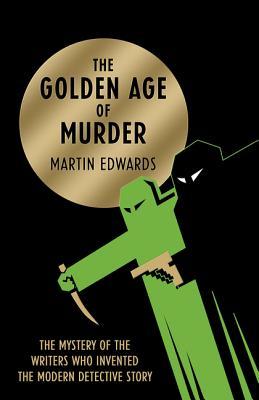
Martin Edwards wins an Edgar Award by M.W.A. for Best Critical, with The Golden Age Of Murder

I wish express my most sincere congratulations to Martin Edwards,


significant English writer  and very acute critic of detective fiction, for the recent victory of an Edgar Allan Poe Award for M.W.A. 2016, for "Best Critical", with his essay 
"The Golden Age Of Murder". 
Pietro De Palma

Tuesday, April 19, 2016

John Dickson Carr : Fire, Burn! , 1957


Years ago, in Italy, in a debate about the context of the best historic mystery by Carr, I gave the palm of the best to The Devil In Velvet, and as the second rewarding Fire, Burn! while others favored other novels such as Fear Is The Same. A few years later, in another debate, I changed my opinion, giving the prize for best novel of the genre ex aequo to The Devil In Velvet and Fire, Burn!
On that occasion Mauro Boncompagni, the greatest Carrian italian critic,  made reference to the judgment of a historian of collecting books, John Cooper who had designated as the best historic mystery by Carr, Fire, Burn! Now I do not know if this judgment is absolutely legitimate, but then everyone can say what he thinks. It is certain that Anthony Boucher, when this novel was published, said:
“As history, as romance, as mystery, as detection, the history is splendid, with an exact and detailed picture of the Yard’s early days, an alluring love story, copious action and a solution wholly surprising”.

The novel is based on a jump back in the time of the Scotland Yard Inspector John Cheviot, which is by taxi and is on his way to Scotland Yard. Suddenly he loses consciousness and finds himself in London in 1829: it is in a carriage and he is going in the former headquarters of Scotland Yard. He does not know how he got there and who he is, but soon becomes aware to be a policeman also there, to be from a wealthy family, great swordsman and marksman with his gun, fighter and player, tombeur de femme for more: indeed, he is the lover of lady Flora Drayton. At Scotland Yard he is summoned as he has  asked to cooperate with the police and to put his qualities in the government service. His first case seems somewhat trivial: he must find out who steals food from the cages of birds of Mary Boyle, Countess of Cork.
John Cheviot does not believe his ears: is it possible that they ask for such a thing? The fact is that the noblewoman is one of the noble people who supports the establishment of a strong and efficient organization and therefore they can not disappoint her.
John Cheviot will go there in the company of his mistress, a too noble woman, and friend of the Countess. And there he will be reached by Alan Henley, Secretary of Scotland Yard.


John soon realizes that with the stealing of food there is also the theft of the Countess's jewels: they having been stolen from the litter box in the room of the Countess, were hidden in the feed birds. In other words there is a complicity in the Countess's house, although she blindly trust of his relatives, protected and servants.


While John is trying to figure it out, a young aristocratic lady is killed before his eyes, protected from the Countess: Margaret Renfrew. The young woman was hit by an invisible and silent bullet, since neither John nor his mistress nearby nor Henley have seen or they have heard the firing or the smell of gunpowder. However, then, after to subject the corpse to autopsy, will fetch a perfectly spherical ball of lead, clean and not instead blackened by gunpowder.
John has found a small pistol, dropped from the sleeve Flora brings with her, and in the rush to protect her, he sets it aside, not delivering it and not mentioning it in his report: she says she had found it there, and that the pistol had been lost time earlier, and then therefore she thought that someone had left to accuse her. Moreover, she says, the sleeve presence is explained by the fact that one of his two gloves was broken and she did not want to do bad figure.

In the hall, Cheviot is also facing a touchy captain of the guards, Hugo Hogben.  John learns from the Countess,  Margaret Renfrew was the mysterious thief who had stolen a ring with a solitaire. And the Countess of Cork, to hide the precious things, had buried them  in the feed of drinkable birds, not foreseeing that someone had spied her and then at the night had emptyied the feed birds containers. It is suspected that Freddie Derbitt a friend of John, may have been the lover of Margaret Renfrew. Cheviot understands that the place where find clues it’s the gambling den by Volcano in London, frequented by high society, where the jewels can have been changed with money. There Cheviot will find several people: from Flora to Hogben, from Freddie Derbitt to notables and lords. And he will discover how Volcano scams people: through a rigged roulette actuated by compressed air. And at that time he will also understand how that could happen that the Renfrew may have been killed by an invisible bullet and that they have not heard noise or smell of gunpowder, because the bullet was shot from an unusual weapon that does not use gunpowder, concealed in a walking stick.
Cheviot thinks about who can be the murderer, but the idea is so crazy that no one would believe him. And so he must provide evidence and sends his men to frisk a certain apartment. And so the date and time fixed in advance, he will nail the murderer, after having humiliated his accuser, the captain Hogben that, even to take revenge on him, accused him,  testifying falsely.
Cheviot will prove the bullet that was recovered with the autopsy of Renfrew could not have been fired from the gun fell from the sleeve by lady Flora, because its diameter is more little than that could be shot, but instead it could be shot from a special weapon. The revelation will show the murderer  is one of the persons agreed there  in front of Scotland Yard chiefs: from Hogben to Lady Flora, from Henley to Miss Tremayne, from Bulmer Sergeant  to Inspector Seagrave.
Bur when Cheviot will be killed from Hogben (who is not the killer), in that moment…Cheviot will return in himself, in the twentieth century and he will understand to have dreamed: he had hit his head in the aftermath of the taxi in which he was .
And when he sees the face of Lady Flora Drayton, he understands she is his wife, whose name is…Flora. 
Extraordinary historical novel, mixes suspense, detection, mystery and an impossible problem solved with customary nonchalance. The historical penetration is prodigious, the meticulousness with which the story is built, admirable and credible construction of figures. All in an era, that of George IV, described in detail: can almost see the characters as they talk, laugh, dance, play, duel.
To better appreciate the historical deepening operated by Carr, you should have under my eyes the final notes of the author's fist. The time of the novel is placed immediately after the end of the Second World War, when there was a series of tragic fogs in London, which cause dozens of fatal accidents: during one of these, it happens the car accident in which Cheviot is involved.
The step back in time is a literary device that Carr used on other occasions, and which is connected to the admixture of real and fantastic elements, to the dream experience and that of real life, which binds together form a whole inextricable from hard separate the true from the false, the real from the unreal. This dimension was already been tested in other famous novels: for example, in The Burning Court, in which one finds a person associated with two different figures, one in the present and in the past one. In that novel is, to a greater extent, the fantastic dimension, more than here, although in this novel, emerges the suspicion that the Cheviot itself has lived these events, and that he therefore is nothing more than a reincarnation in the twentieth century of Cheviot who lived in the nineteenth. But also in The Devil in Velvet, there is a jump back into the past, the result of a pact with the devil, and therefore there are fantastic elements. And even in the Fear Is the Same, is traveled the same track dive in the past. We can therefore say that the jump in the past, maybe in people who are suddenly living experiences in the past having the consciousness of having already lived, having crossed the same dangers, and having known the same people, is one of the most typical of escamotages whose Carr serve to legitimize a story of detection in the past.
However beyond the dimension of the detection and pure invention, at their maximum, Fire, Burn! is a historic mystery of remarkable invoice: so good, that in 1969 won the Grand Prix de Littérature Policière, tied with another great historical novel, where there’s historical research: The Daughter of Time by Josephine Tey.


The Carr's novel is different from that of the writer yet: while there it tries historical hypothesis, that is doing very sensible hypothesis about King Richard III, mixing history and crimes, according to a course of action experienced by Carr when he was tried many years before to reconstruct the murder of Sir Edmund Godfrey, the Carr’s novel instead implements a synthesis of truth and falsehood: it inserts into a frame, next to real characters some fake characters, thus creating a historical reality entirely invented, but it could also take place. For the first time Carr, in other word, sapplies to the historical novel developed by Georgette Heyer the movements of mystery, creating the foundation for a genre that still reaps today big success.
One last thing: The title. 

Fire, Burn! explicitly it refers to a feature of the same Cheviot, that is to his impetuousness and recklessness not mediated by risk weighting, whom Maine, one of two Commissioners from Scotland Yard, had blamed to him.
The resti, Fire, Burn! is nothing more than one half of a famous verse of Act Four, Scene I of Shakespeare's Macbeth:  Fire Burn, Cauldron Bubble.

Pietro De Palma